February 21st, 2012 — 5:13pm
Once again, posts have been few and far between over the last month. What can I say? I’m a busy man. I’ve just submitted the text for the forthcoming ‘Enchanting Myanmar’ book which should be out in October. I currently editing and selecting photographs, a long and laborious task.

Anyway, here’re a few snaps from Inle Lake, one of Myanmar’s most popular tourist destinations. Located 35 kilometres from the town of Heho in the Shan State, the shallow lake covers over 110 square kilometres and is surrounded by villages inhabited by Intha, Shan and other ethnic groups and hill tribes including Pa O and Padaung.

Most visitors stay on stilted resorts over the water and around the edge of the lake, and make excursions by boat to colourful morning markets in nearby villages.

One of the curiosities of the lake is the leg rowing fishermen who also use large conical baskets to catch fish. Bobbing around in another boat, it’s a challenge to capture good shots but these do the job.

There’s a few more in the Myanmar Gallery.
Comment » | Travel
November 23rd, 2011 — 6:07pm
On my last few visits to Myanmar it has been clear to me that there is a renewed sense of optimism within the country. The photo below was catpured in Yangon and illustrates this beautifully. Just a year ago, such a scene would have been unthinkable.

I have been visiting Myanmar for the past 15 years, regardless of the political climate, traveling extensively in both urban and remote areas. I always objected to being lectured to by politicians as where I should not travel, always opting for personal experience and direct engagement with locals over taking the advice of sanctamonious wankers like Blair. If, as an individual, you were to make judgments as to where you should or should not travel based on government action, the USA and the UK would have been high on the list of places to avoid for decades.
During my recent visit to Myanmar I noticed a large increase in the number of tourists, particularly from Europe, and a tour operator I talked to said that next year they expected a leap in arrivals. Of course, this is all dependent on the continued thaw in relations with Europe and America. But I say visit regardless. The people are as warm and welcoming as you could ever wish to meet…and yes, they want you there.
Comment » | Travel
November 23rd, 2011 — 5:12pm
In Myanmar, the staple diet is rice; a grain has shaped the landscape of the Irrawaddy Delta. Paddy cultivation is still predominately organic and not mechanized.

From the ploughing, broadcasting of seed, the replanting of nursery seedlings, to harvest and threshing, all the work is done without the use of machines. It was also been stated that rice production generates a direct or indirect income for many as 75 percent of the population. Prior to World War II, Myanmar was the world’s largest rice producer and even today after years of economic and political isolation it is still in the top ten.

During my recent visit, it was harvest time. While traveling across country I stopped off at a few fields to photograph the harvest and the winnowing of rice. The whole process is backbreaking work done under the glare of a hot sun.

I have nothing but admiration for the farmers grafting for little more than a subsistence lifestyle.

Comment » | Travel
November 22nd, 2011 — 5:20pm
Travel another couple of hours up the Lemro River from Mrauk U and you’ll enter the lower reaches of the Chin State. Most of this mountainous area is currently off limits to travellers but a handful of ethnic villages can now be visited with a guide. The main attractions for tourists, in addition to the outstanding natural beauty, are the ethnic Chin women who sport impressive facial tattoos.

In most villages there are only two or three women remaining with the distinctive tattoos as the tradition is said have died out. I hope to be able to get permission to explore deeper into the Chin State at a later date and see if this is true or not.

The women are very welcoming as they don’t receive too many visitors yet. However, Myanmar’s tourist industry is on the verge of a boom and I suspect these lovely women will soon tire of the intrusion.

The ladies told me that they were about 12 years old when the tattoo ritual took place and the process lasted for three days. Reasons given for the practice vary but the most common explanation is that it was done to make the young girls less attractive to other tribes and prevent them being kidnapped. All agree, however, that the process was extremely painful to endure with even the eyelids being tattoo with the needle and dye extracted from a plant.

There are occasions when I must admit to being a reluctant photographer and upon meeting the Chin women, I experienced one of those moments. Despite being told that they had no objection to me photographing them, I think I would have preferred just to sit and talk rather than shove my lens in their face. Nevertheless I had a job to do. I was also made to promise that I will try and get a picture to one of the ladies which I intend to do.

Comment » | Travel
November 22nd, 2011 — 4:10pm
The former capital Rakhine State in western Myanmar (Burma), Mrauk U – pronounced Mror Oo – is an atmospheric town and home to many beautiful ancient temples. It is reached following a 6 hour boat journey from Sittwe. Although the area currently welcomes few tourists that will soon change and won’t be too long before an airstrip opens to cut out the boat trip.

The town and surrounding countryside is scattered with temple ruins, many of which are still used by local people and monks.

I was lucky enough to be there on the night of the full moon, always a special time to be at a temple in Myanmar, and get some nice shot of monks relaxing as the sun set.


You can see more images in the Portfolio section.
Comment » | Travel
November 22nd, 2011 — 3:33pm
I’ve just returned from another trip to Myanmar. Travel within the country is pretty demanding as the infrastructure has suffered from many years of neglect, but the rewards for travelling here are great. If I could only travel to one country over the next decade it would be Myanmar. At every turn there is another fabulous photo opportunity.

Over the next few days I’ll be posting images from several destinations, starting with the magnificent Golden Rock. Also known as Kyaik-htiyo, the Golden Rock is one of Myanmar’s most sacred Buddhist sites.

Located around three hours drive east of Yangon, it is a place of pilgrimage for Buddhists from all over Asia who come to pray and rub gold leaf on the precariously perched rock.

As with many sites of pilgrimage, getting there requires effort. A nail-biting truck ride takes you halfway up the mountain, and the rest of the steep climb is done on foot. If you want to experience both sunset and sunrise, make sure you stay at the hotels at the top – just a 10 minute walk from the actual site.

Comment » | Travel
October 24th, 2011 — 10:17am
Since Aung San Su Kyi’s release, Myanmar and Yangon has been put firmly in the travler’s spotlight. Yangon is one of my favourite cities in Southeast Asia and with the current mood of optimism for the future, there’s never been a better time to explore the country’s enchanting former capital.

Yangon is an extremely pleasant city to wander around with a camera – a visual feast of imagery just waiting to be captured. Here’s a few street scenes from my last visit.


Visa on arrival is no longer available so if you are planning a trip, make sure you apply in advance at your nearest Myanmar embassy.

Hotel offerings in Yangon are rapidly increasing and the quality is excellent. Highly recommended is the Traders Hotel by Shangri-la. Located in the heart of the city within minutes walking distance of the Sule Pagado and the famous Scott Market, 242-room Traders Hotel offers value for money, comfortable rooms and suites, and Club Floor accommodation, all with impressive views across Yangon. Service is outstanding and the staff extremely helpful. Guests also benefit from a satisfying buffet breakfast of local, Indian and western cuisine at the Traders Cafe. Traders Hotel is located at 223 Sule Pagoda Road, Yangon. Tel: (95 1) 242828. Visit the website at www.shangri-la.com
Comment » | Travel
October 24th, 2011 — 9:11am
A stone’s throw from Mandalay’s stone carving district is a street lined with foundries casting bronze Buddha images. Using a process that dates back thousands of years, skilled craftsmen create detailed wax images of Buddhas which are encased in earthenware clay. The mould is then heated to burn out the wax and the bronze poured in. Foundries in Mandalay are renowned for producing high quality bronzes that are commissioned for temples all over the country.

Here a sculptor at a workshop in Mandalay is working on a large wax image.
Comment » | Travel
October 17th, 2011 — 12:21pm
Fifteen kilometres from Mandalay in the former capital of Amarapura is U Bein Bridge. At 1.2 kilometres, it’s the world’s longest teak bridge and possibly Myanmar’s most recognisable landmark. It’s certainly one of the most photographed.

I first visited here 12 years ago when the country was attracting few visitors. Today, it is well and truly on every itinerary and I shudder to think what it will be like when the Myanmar tourist industry develops.

U Bein Bridge is one of those locations where you hope for clear skies, still water and vibrant sunsets. Unfortunately on the first of two visits last week I got a nasty washed-out sky, a breeze and no sunset to speak of – hence the need for a tripod and a slow shutter speed to get bring a touch of blue to one of the shots. I returned briefly the following evening when conditions were pretty similar but at least the sunset was OK.

U Bein Bridge connects two small communities and spans a vast area which during the dry season is used for farming peanuts, sesame and other cash-crops. This year, Myanmar’s rainy season has been longer than usual but seems to be nearing the end. As a result the water was still pretty deep when I visited and the fishermen were out with their nets.

In years of excessive rain it is not unknown for the bridge to be completely submerged. In fact the middle section now includes some concrete posts, replacements for teak pillars that were washed away a few years ago.

Next week I’ll be uploading a large batch of images from Myanmar into the Portfolio section so keep a look out. And don’t miss the fisherman sitting in the tree below…

Comment » | Travel
October 17th, 2011 — 9:52am
I’ve just returned from a week-long trip to Myanmar and the city of Mandalay to take photographs for my current book commission. Mandalay is to Myanmar what Chiang Mai is to Thailand – the centre of the country’s arts and crafts industry. Weaving, bronze casting, stone carving and much more can all be found here.

As with most arts in Myanmar the focus of the stone carvers is religious. In one part of town the streets are lined with the workshops of skilled craftsmen who attack pure white marble with angle grinders and drills to create the most enigmatic Buddha images.

Carvings of all sizes, from the smallest keepsake to monumental three-metre high statues, can be seen in all stages of production.


It’s a fascinating area to explore, especially in the early morning when monks and nuns walk the streets collecting alms.

Comment » | Travel
August 22nd, 2011 — 3:12pm
While in Yangon, this scene caught my eye. A monk, who has obviously not quite managed to shake of his desire for wealth and the material world, is choosing his lottery ticket while standing next to a woman with a Mickey Mouse umbrella.

Visit the Portfolio for more images of Myanmar.
Comment » | Travel
August 22nd, 2011 — 1:38pm
I have just returned from Yangon where I was taking a few snaps for a book I am working about Myanmar’s many tourist attractions. It was great to be back in the country which is one of the most beautiful and photogenic in the region.

Whenever is on my schedule, I always find time to make a trip to the Shwedagon Pagoda. The shot above was taken in a shop selling Buddha images on the street leading up to the temple’s east entrance.

Right now the country is in the middle of the rainy season. It’s a time when you can capture a very special atmosphere at the temple.

The temple has a truly magical ambience and it is easy to spend two or three hours there quietly observing and photographing. It is essential to pay at least a couple visits: one in the early morning and one in the late afternoon and evening. The quality of light and the gold of the pagodas is constantly changing and patience is always rewarded.

There are some particularly beautiful Buddha images surrounding the many small zedis at the temple.


Monks at the temple can be seen meditating or preaching to visitors. They also enjoy talking to foreigners and are curious to know what we think about the country. I had to smile when one said to me ‘in the past, when I was a human being, I was a tour guide.’

See can see more images in the Portfolio section here.

Comment » | Travel
October 8th, 2010 — 12:48pm
Continuing the foodie theme, here’s a couple of shots of street eats in Yangon.

Burmese food is an intruiging mix of Thai, Chinese and Indian influences, resulting in a distinctive cuisine that is still largely unknown outside the country. To be honest, eating street food in Myanmar is a risky affair as the standard of hygiene is diabolical but there are some excellent local restaurants around.

Comment » | food, Travel
August 19th, 2010 — 8:25pm
Here’re a few shots taken in the markets showing women and children with the distinctive tanaka face powder.
Burmese people are some of the most welcoming and friendly you could ever hope to meet. Wander around the vibrant markets and every glance or tentative inquiry is greeted with a capacious smile and a handful of playful words shared with neighbours.
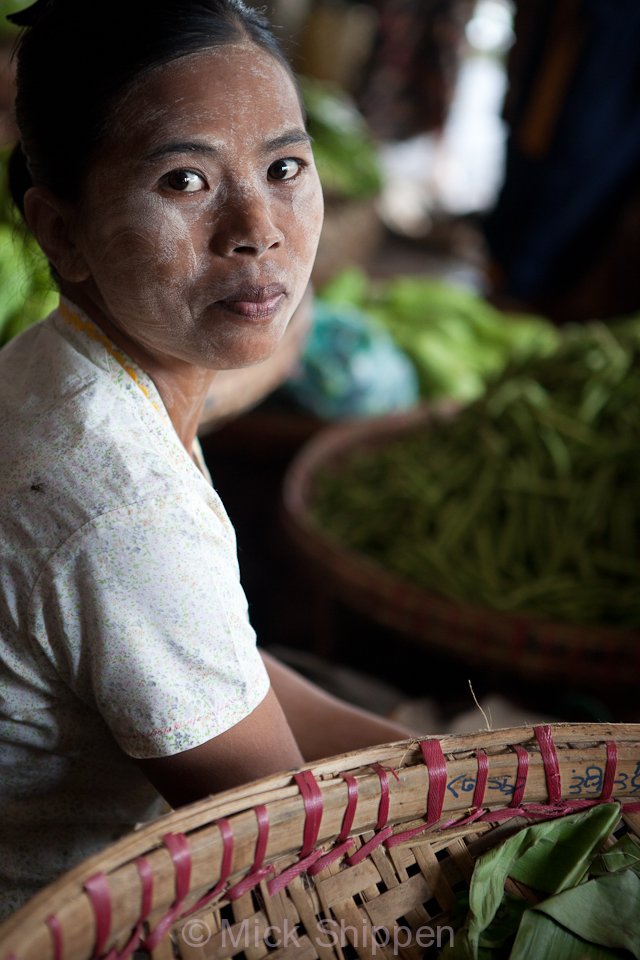
In the early morning and late afternoon, side streets are transformed into a canvas brushed with strokes of violent colour reminiscent of Gauguin’s palette. Squatting among nests of verdant green produce traders draw customers as eager for gossip as they are for fresh produce and a good deal. The atmosphere of markets in Myanmar is intoxicating. The lips of young girls offer thick smoky smiles whilst gently holding slender green cheroots and old ladies dispense ‘cure all’ herbal remedies.
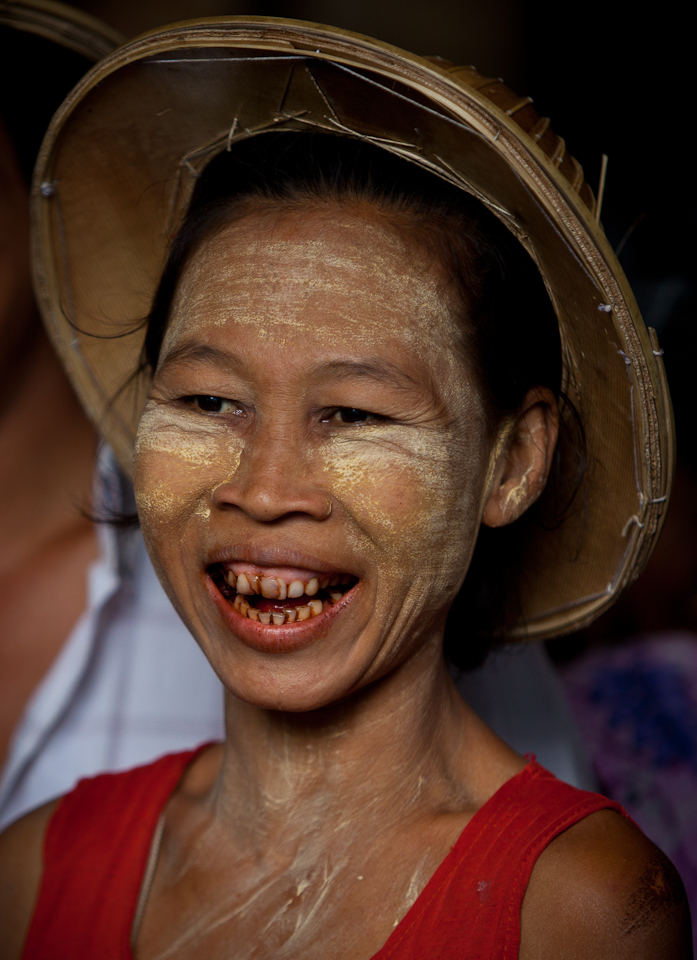
A raucous laugh may reveal a flash of gold proving that in Yangon it really does pay to put your money where your mouth is, or betel stained teeth from years of habitual chewing.
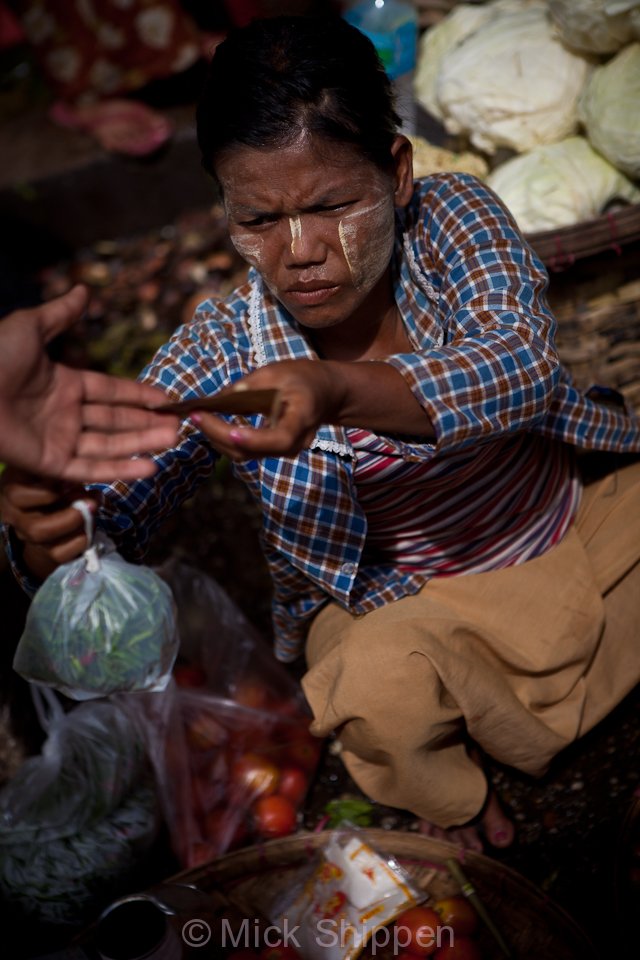
Each woman’s face, cheeks washed with pale yellow powder extracted from the bark of the tanaka tree, exerts a mesmerising glow – smears of light illuminating sun-blessed skin. The markets of Myanmar are a sight for sore eyes; crowded and chaotic but never claustrophobic.
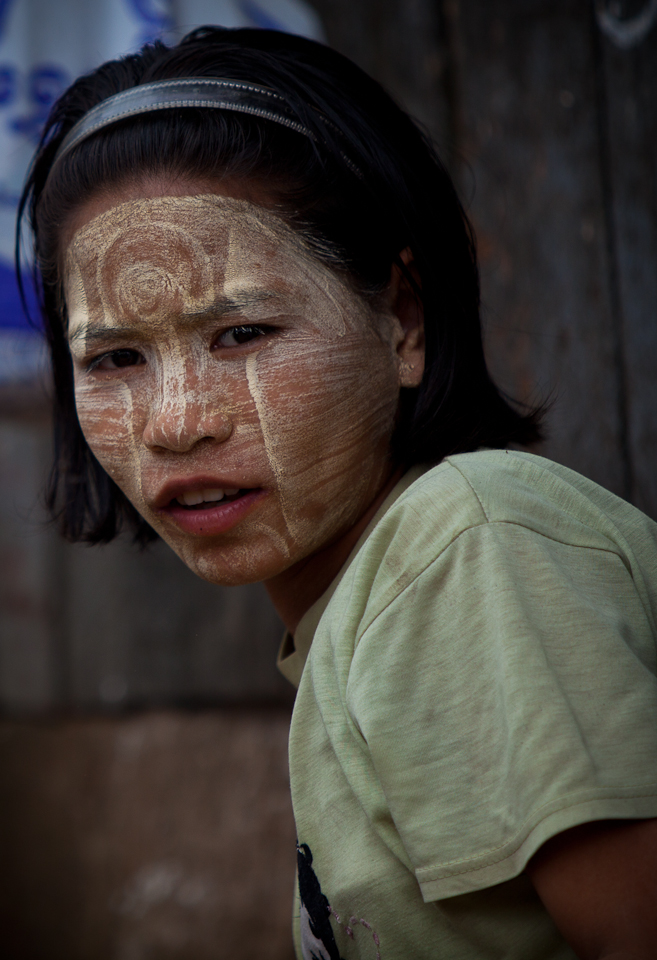
Tanaka wood is sold in the markets. It is rubbed on a grinding stone with a little water to extract it and then brushed on the cheeks, neck and arms.
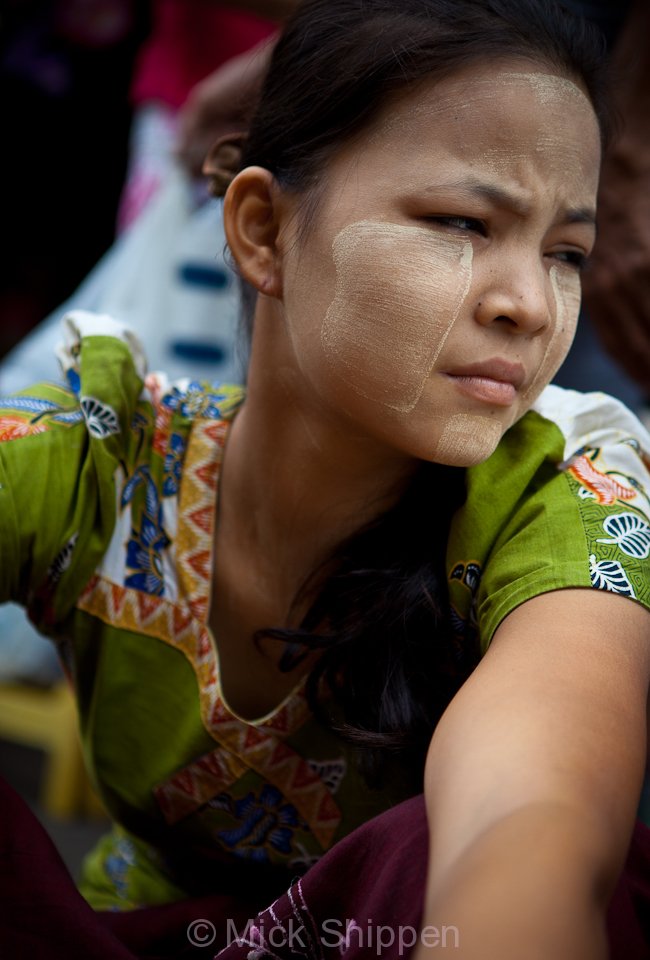
Tanaka is used a beauty product but also as a sunscreen and skin softener. These days blocks of pre-ground powder and soaps are also available.
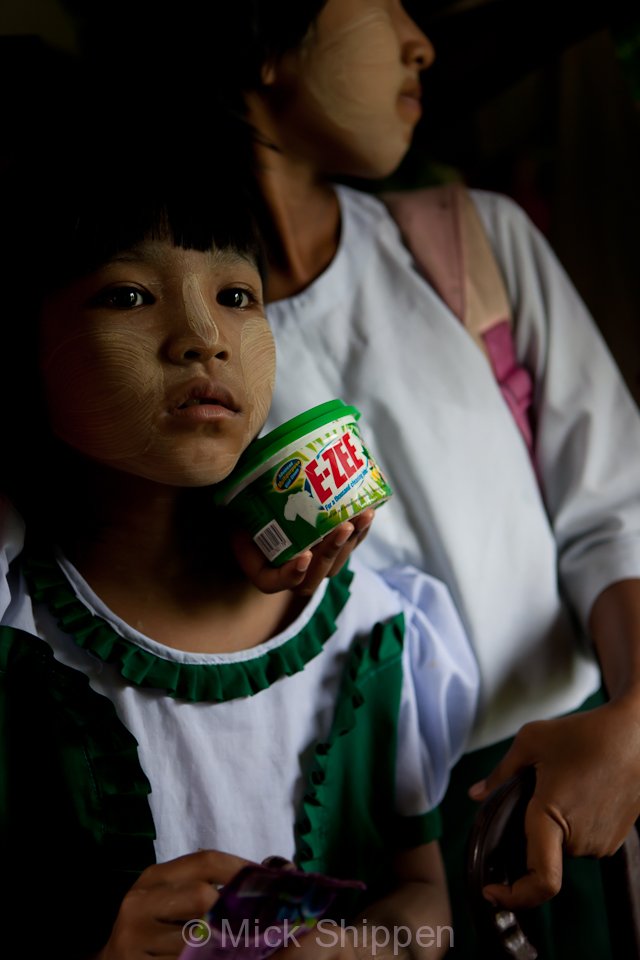
I’ll post some shots of markets at a later date.
Comment » | Travel
August 18th, 2010 — 8:51pm
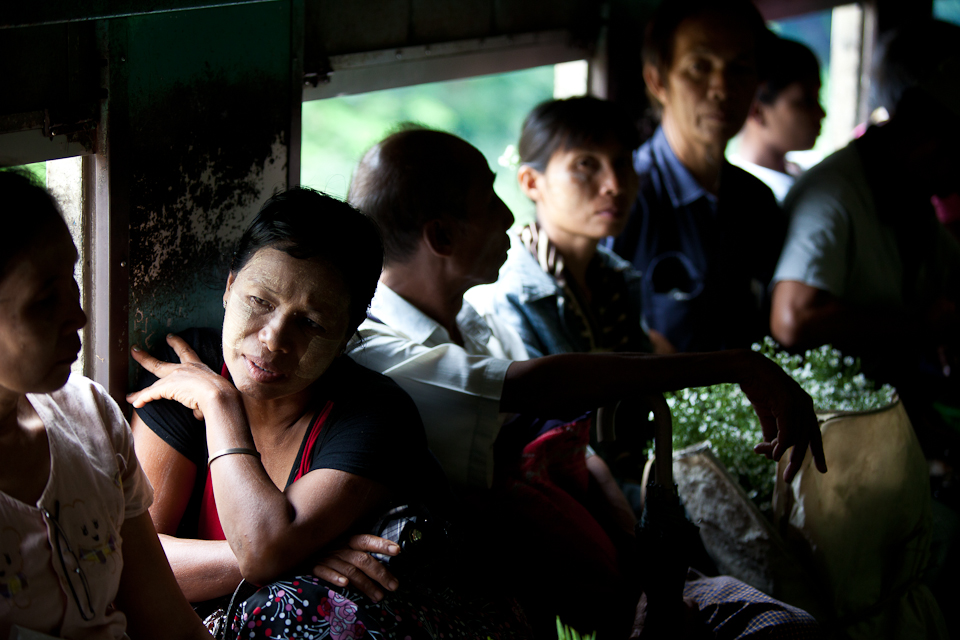
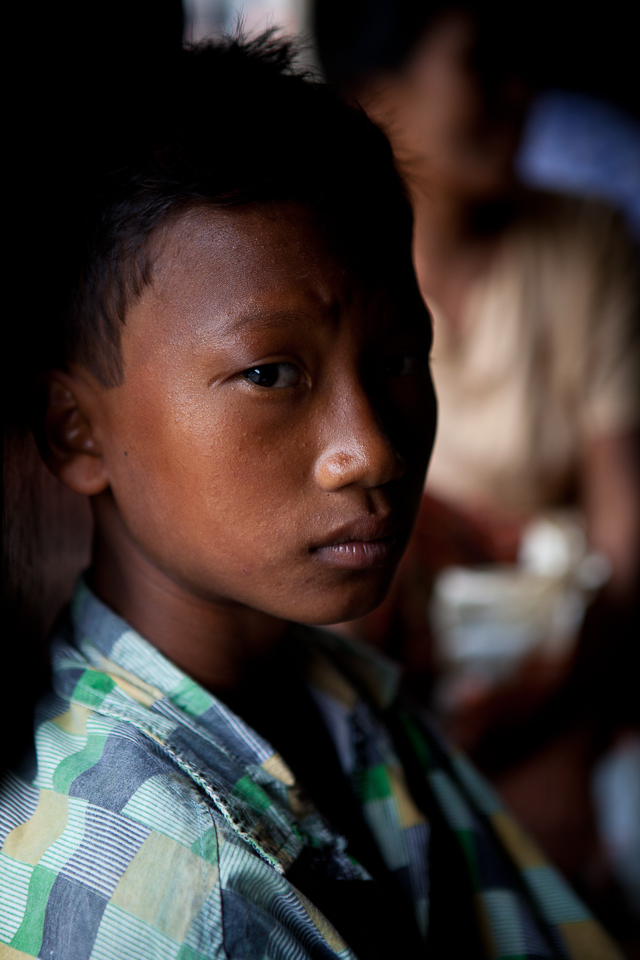
Here’re a few shots taken in Yangon last week of trains, rickshaws and people in them.
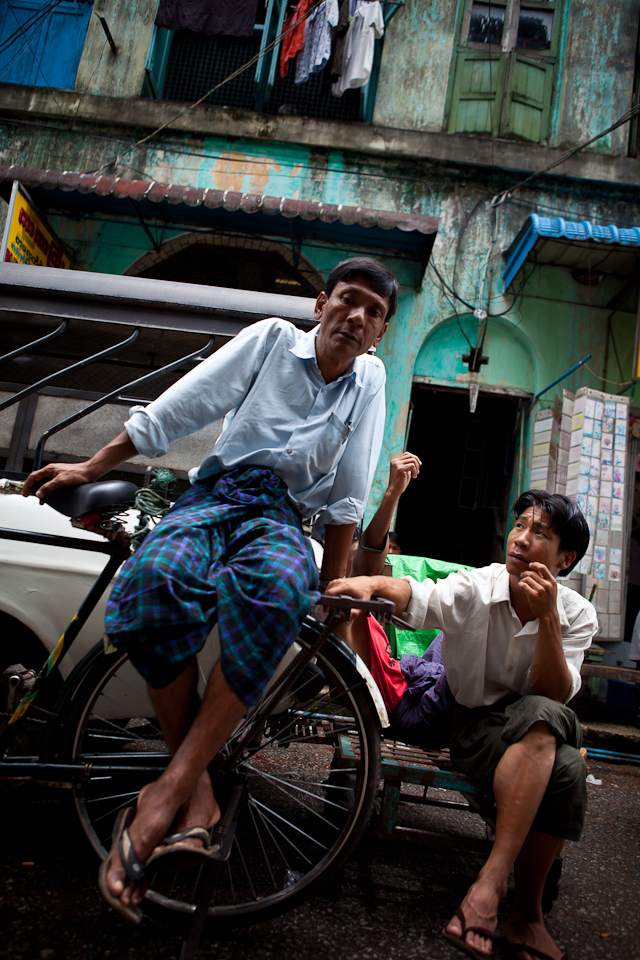
Traffic in Yangon is light considering the population is around 4.5 million. This is due to tight restrictions on the importation of vehicles. Most cars and buses are Japanese imports from the 1980s such as Nissan Sunny Super Saloons and Toyota Corollas that have seen better days.
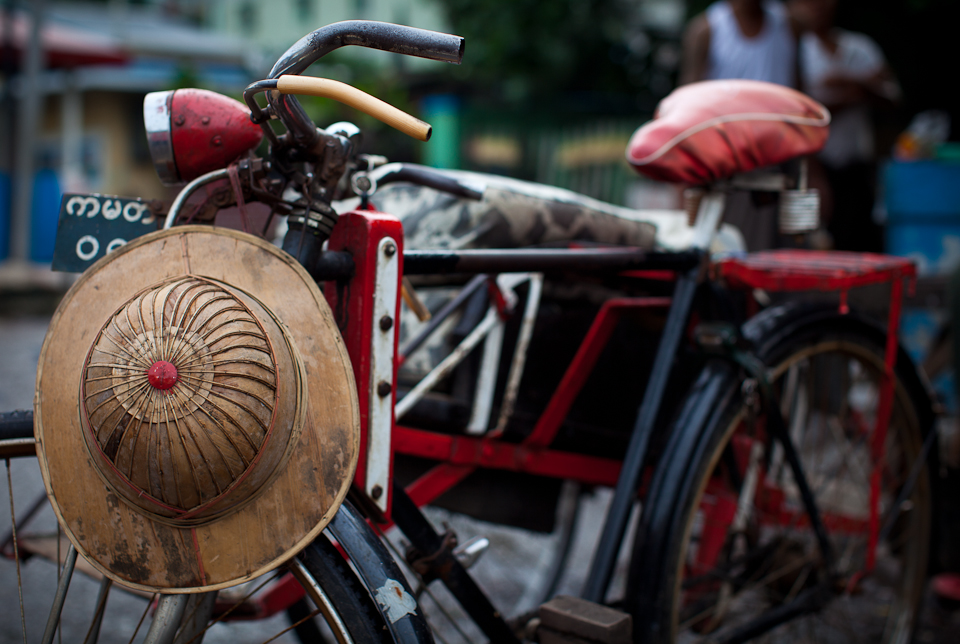
Even prices for a battered car are very high and can only be afforded by the well off. There are no motorcycles at all as they are said to cause too many accidents and were outlawed in the city last year.
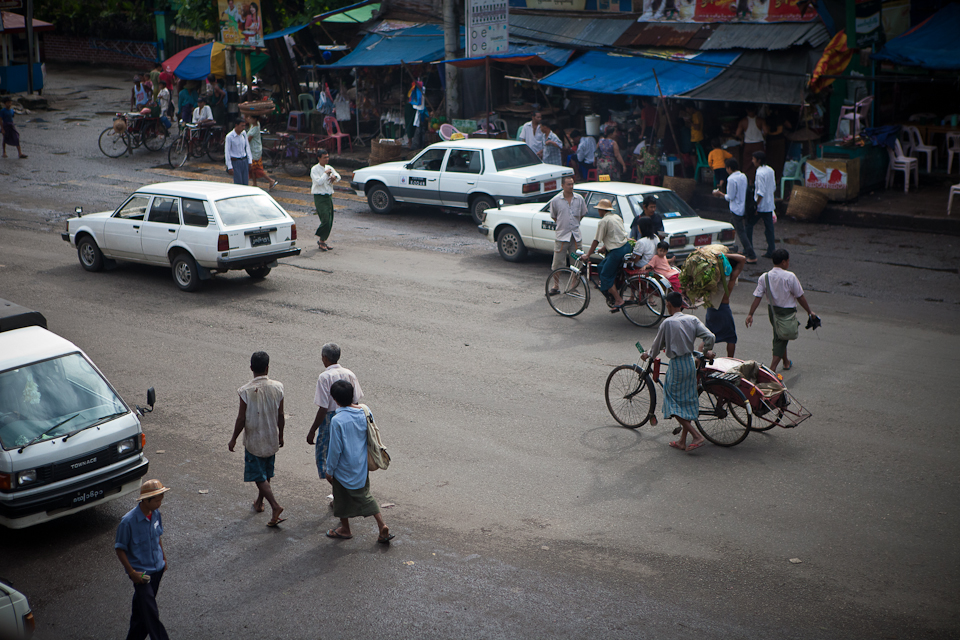
The majority of people in Yangon use the circular line train, bus, unmetred taxi, trishaw, bicycle, or simply walk. Of course, all this makes it a very pleasant city to get around.
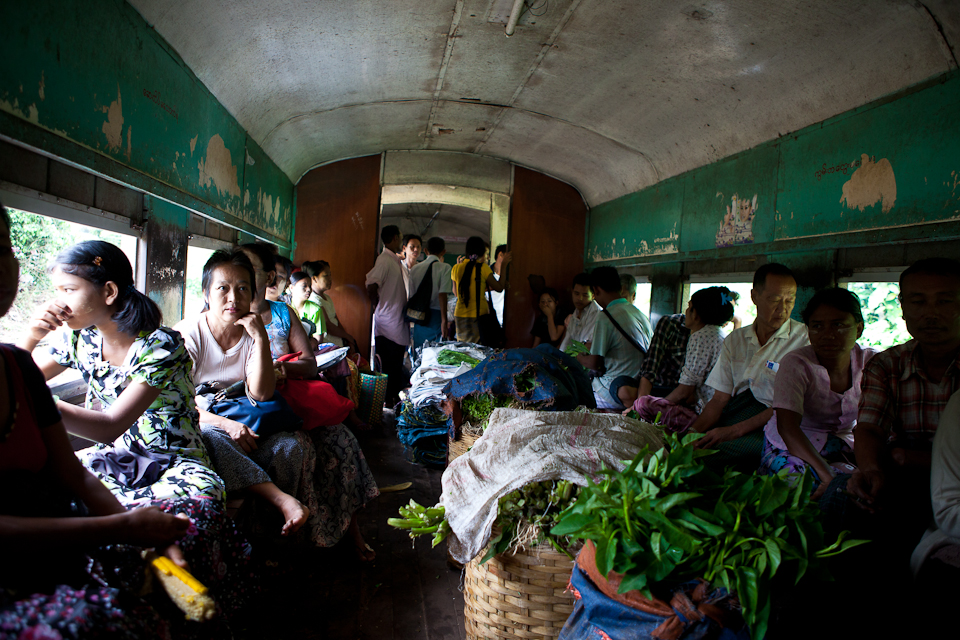
The train in Yangon is one my favourite travel experiences in any Southeast Asian city, taxis are dirt-cheap, trishaws are a lot of fun, and walking around Yangon with a camera, a joy. In fact, all things considered, Yangon’s traffic policy is something that most cities around the world could do with implementing…although as the owner of a Triumph Bonneville T100 I might have to take issue with the bit about banning motorcycles!
1 comment » | Travel
August 18th, 2010 — 5:58pm
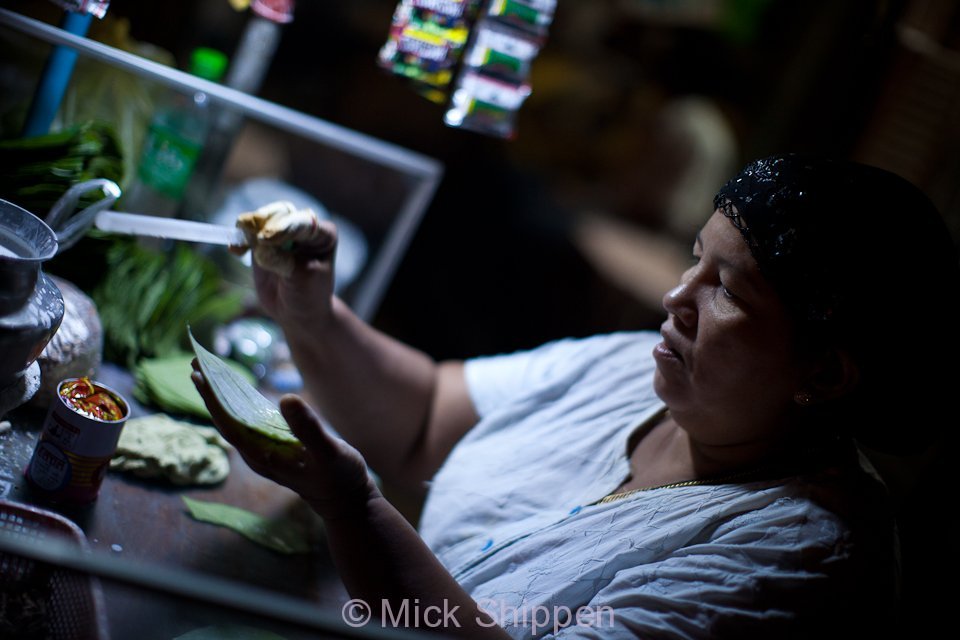
You don’t have to be in Myanmar long before it becomes apparent that the locals love chewing betel nut. Here’s a section from my book, The Traditional Ceramics of South East Asia on the topic to accompany a few recent pictures. More shots can also be viewed in the Myanmar Gallery.
The chewing of betel nut in Myanmar is still prevalent through the country and popular with men and women alike. On almost every street corner sellers stand behind their counters preparing small wraps of the mildly stimulating mixture. Mobile vendors also walk the streets with wooden trays around their necks, each well stocked with the essential ingredients.
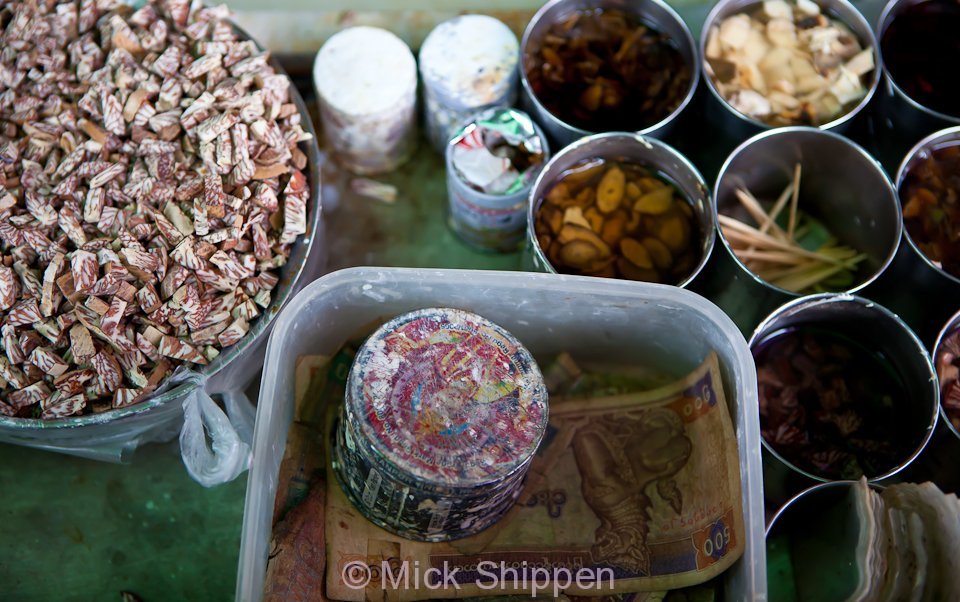
Between friends and visitors a welcome is often extended in the form of these small emerald-green packets – the ‘local chew’. Stained orange lips and teeth as well as the ubiquitous rust-coloured splats on the pavements are all signs of betel chewing. The nut itself which is responsible for the trademark orange staining is from the areca palm while the leaf in which it is wrapped comes from the piper betel vine.
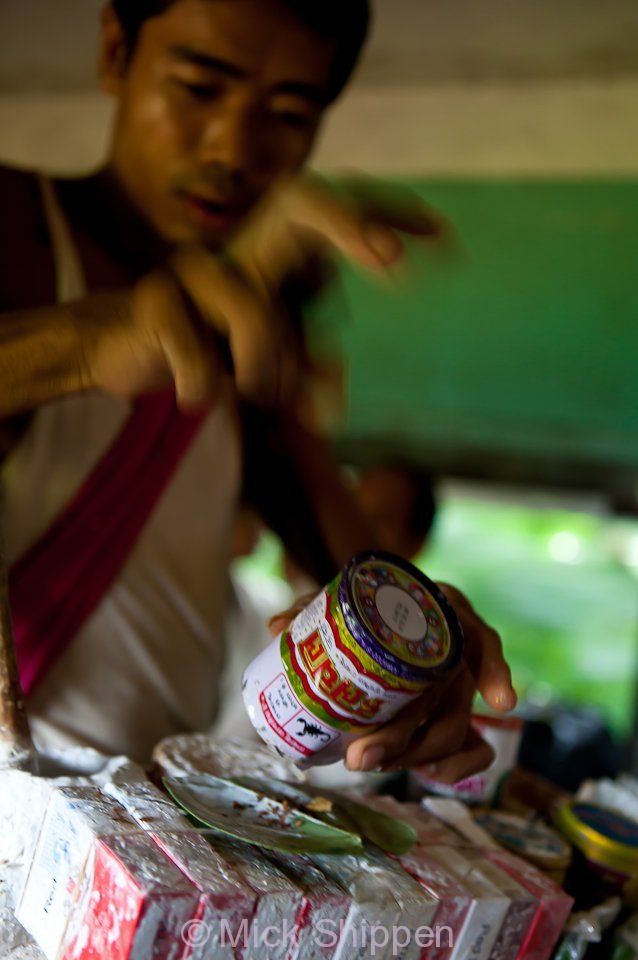
The contents of the betel chews vary according to personal taste. The traditional mixture in Myanmar consists of a betel leaf smeared with slaked lime paste (calcium hydroxide), a few slithers of betel nut and some tobacco leaves. This mixture is generally the choice of men.
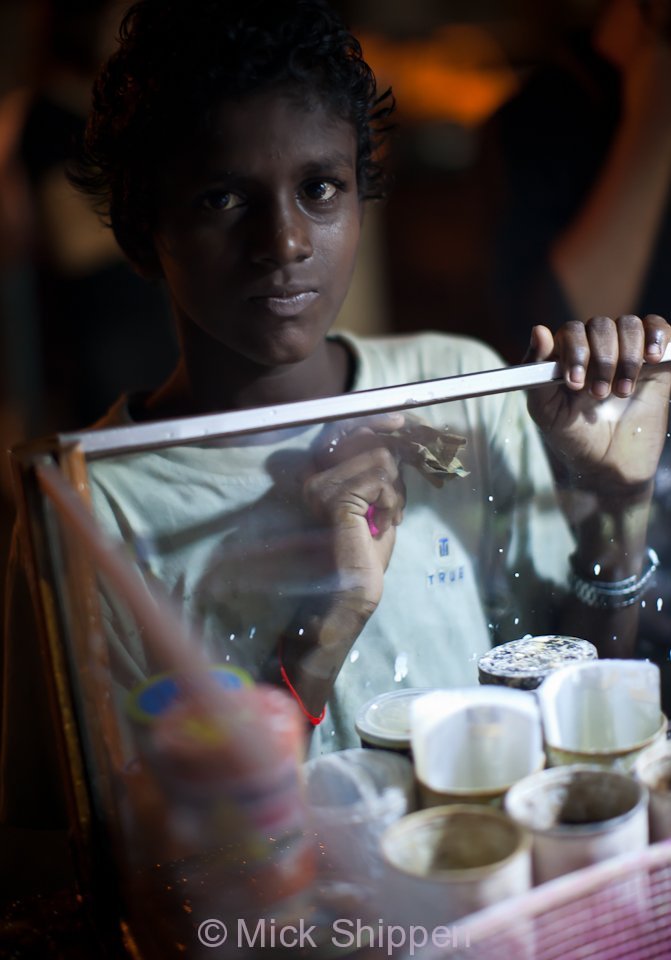
For those who prefer a richer taste a variety other ingredients can be added including rice liquor, cloves, cumin seeds, cardamom and the edible nut from a huge seed known locally as gon nyin. This particular mixture is enjoyed by both men and women.
Comment » | Travel
August 17th, 2010 — 4:47pm
In Yangon, the golden magnificence of the Shwedagon Pagoda pierces the sky with a pinprick and a prayer confirming Myanmar as the jewel in Southeast Asia’s crown. It is impossible not to be moved by the beauty of this incredible temple.

Located on a hill in the centre of Yangon, the Shwedagon Pagoda can be accessed by a stairway at one of four entrances. For those who cannot manage the climb there is also a lift at one entrance. At least two visits are required; one at daybreak and another at night. The temple is open from 4a.m. until around 10 p.m. and the entrance fee is $6.

Once inside I prefer to wander around on my own but there are plenty of freelance guides available if you are interested in finding out the history of the temple.

Apart from seeing the stunning chedis, fine architecture and Buddhist imagery, a visit to the Shwedagon Pagoda is also an opportunity to witness locals in moments of prayer.

Travel to Myanmar still remains a controversial topic in the West and it is clear that boycotts have left Myanmar’s tourist industry on its knees. During my two hour morning visit I did not see a single foreigner at the temple.

Without doubt Myanmar is run by a deeply objectionable bunch and their days are hopefully numbered, but anyone who has lived in Asia for any length of time will realize that poking them with a stick is no way to foster positive change.
I have visited Myanmar on many occasions for matters of research, as well as relaxation, travelling extensively in both urban and more remote areas. Regardless of the political climate I will continue to do so. I have yet to meet anyone within Myanmar who resented my presence or thinks I should stay away; quite the opposite in fact. The locals are delighted to meet foreigners. If, as an individual, you were to make judgments as to where you should or should not travel due questionable government action, right now the USA and the UK would be pretty high on the list of places to avoid.

If you do visit Myanmar, and I see no reason why anybody should refrain from doing so, make the effort to engage with its people at all levels. Look beyond the politics to the individual.

Comment » | Travel
August 17th, 2010 — 1:43pm
It’s almost two years to the day since my last visit to Myanmar so I was delighted to make a five day trip to Yangon last week. It was a welcome break from the daily grind and a chance to explore ideas for a new book that I have been procrastinating about for far too long.
Myanmar is a country of real beauty and intrigue and has retained a strong sense of its cultural identity. Little has changed within the country for decades and as a result it offers a glimpse into lifestyles and traditions which are fast disappearing elsewhere in the region. Despite its abhorrent government, the people are as friendly and welcoming as you could wish for and it is always a pleasure to meet and talk with them.
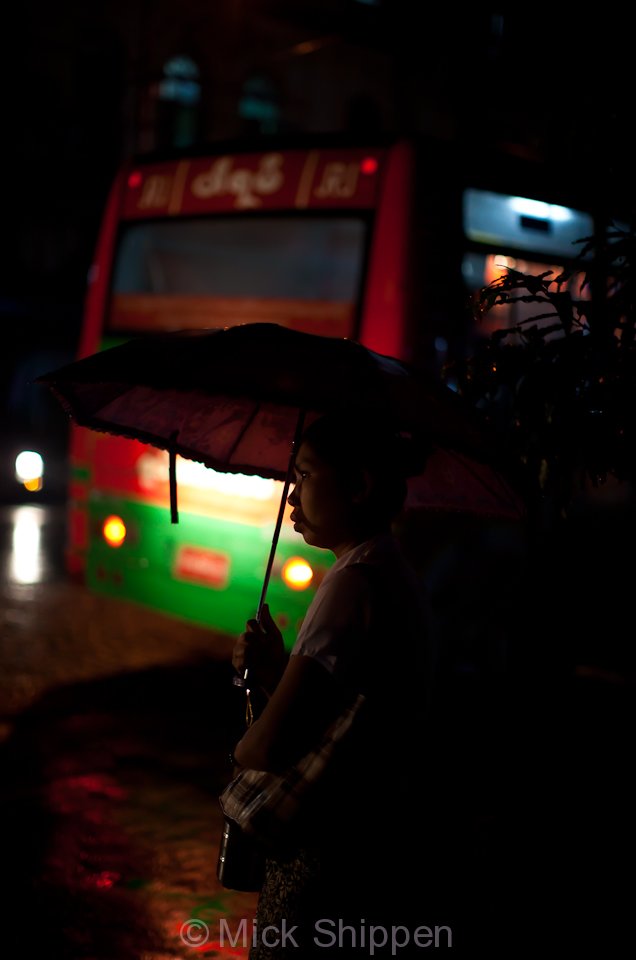
I am slowly sorting through my snaps from the trip and will be posting more over the next few days. Although there is no shortage of subjects or inspiration in a city as colourful and vibrant as Yangon, one of the highlights for me was simply photographing a bus stop in the rain.
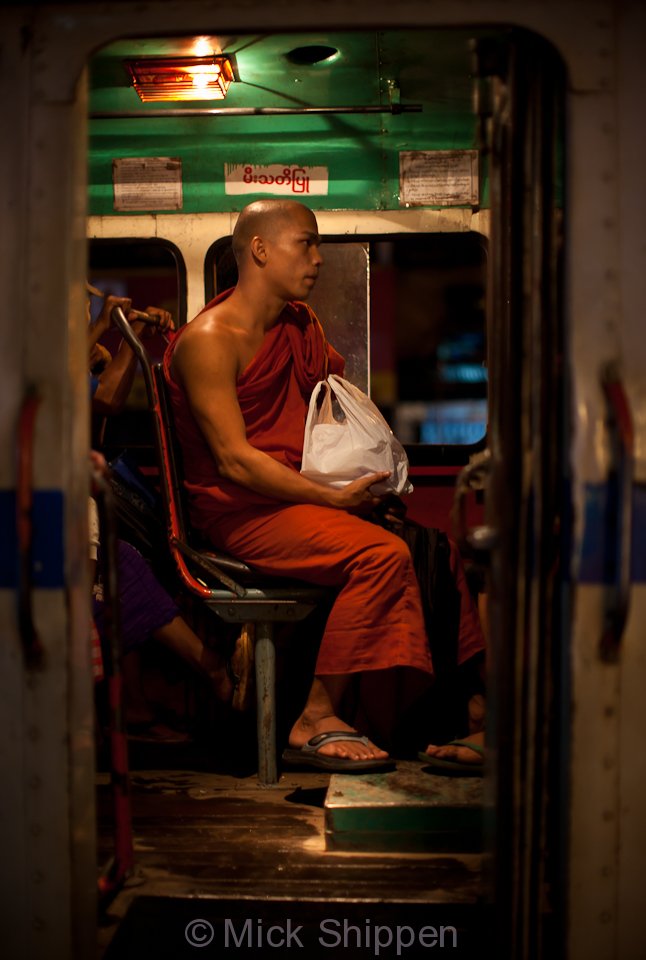
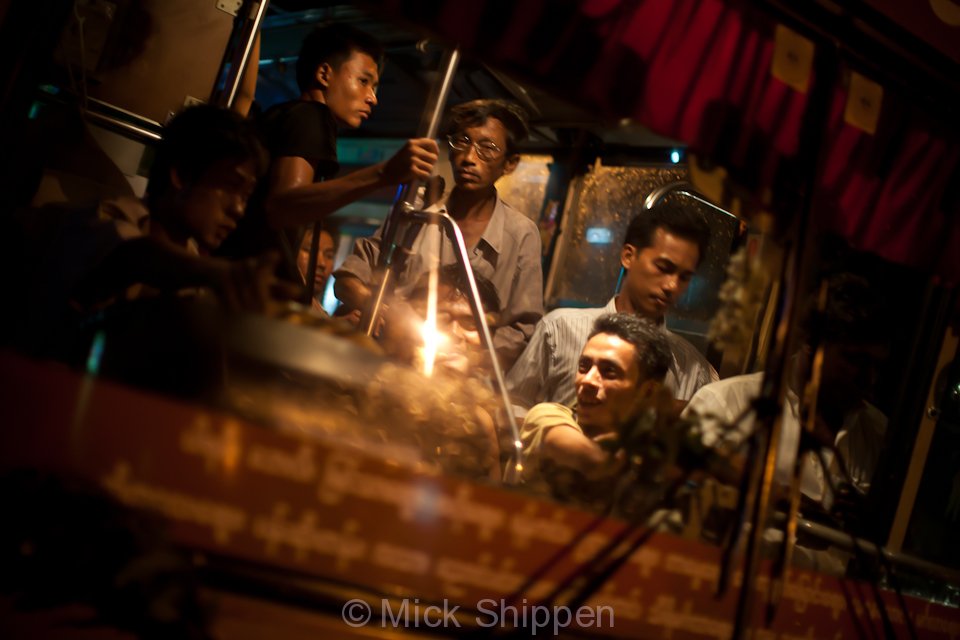
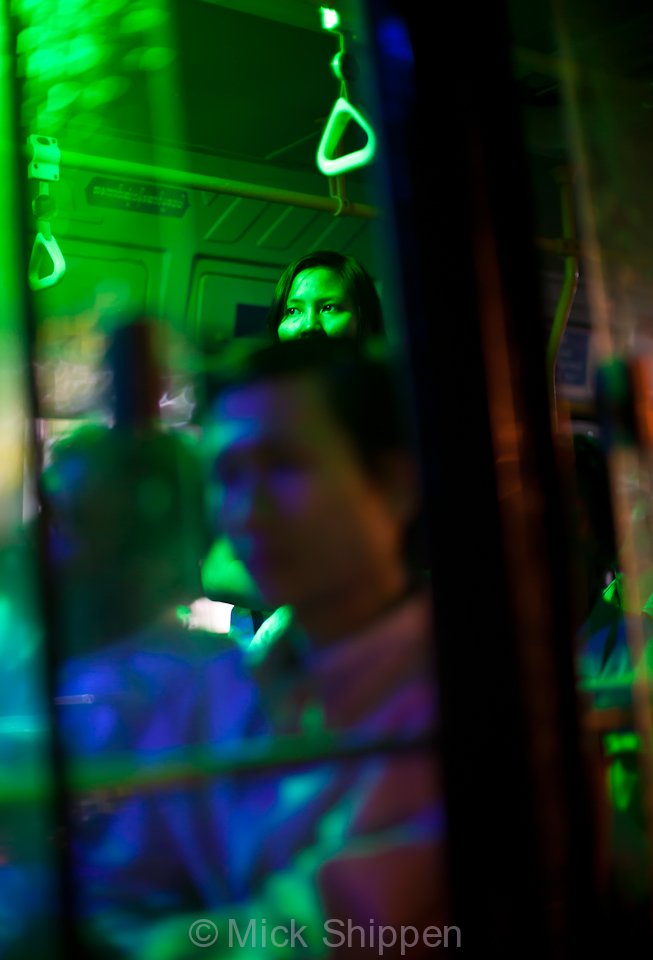
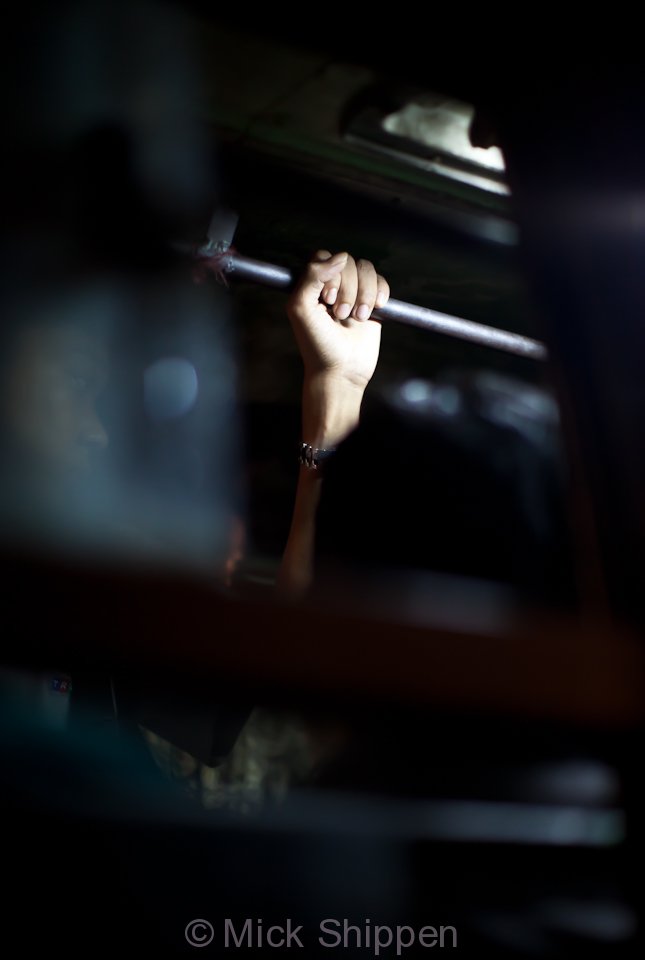
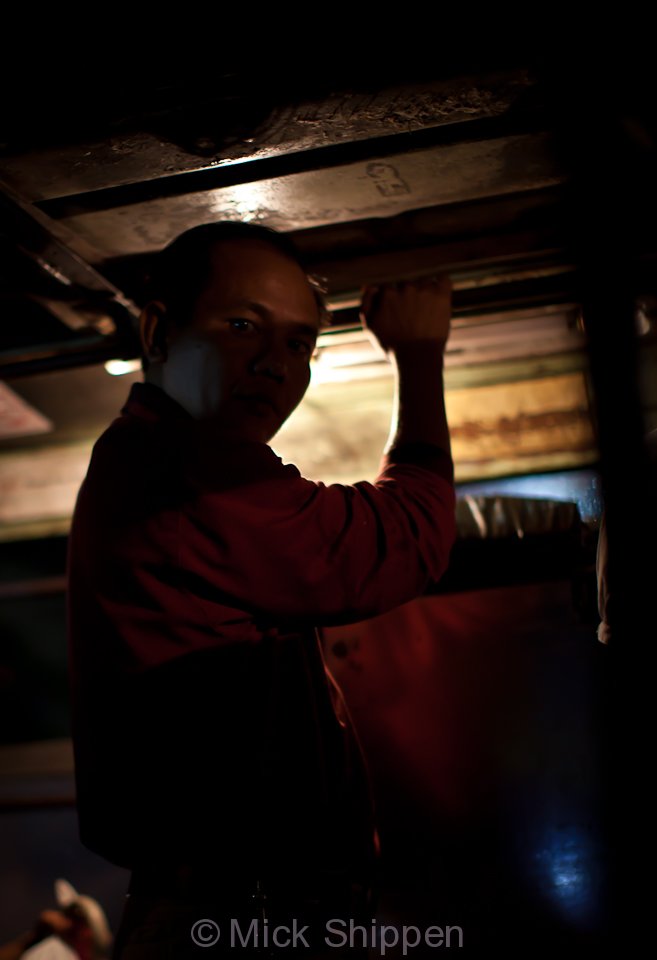
I was wandering back to the hotel from a restaurant one evening and stopped to photograph passengers getting on and off buses in a dimly lit street. Aided by a 50mm 1.2 lens I spent half an hour getting soaked to the skin and the shutter button on my camera is now buggered but it was worth it.
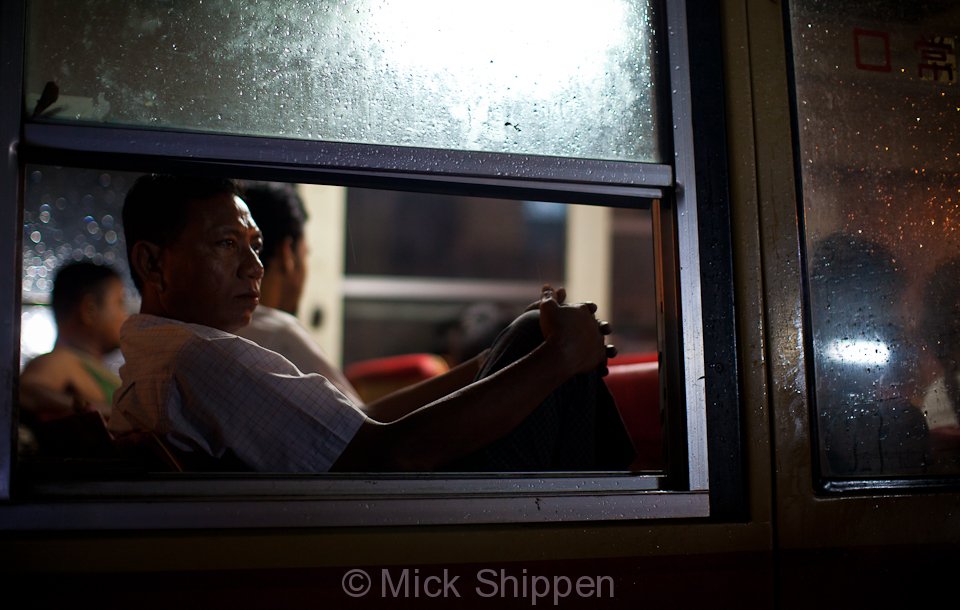
A constant flow of buses pulls up with bus boys touting for customers by shouting out the destinations. Packed with workers going home for the evening, the old Japanese and Korean buses labour through the streets of downtown Yangon then out to the suburbs.
Comment » | Travel
April 30th, 2010 — 5:02pm
Setting up this website has been an interesting experience on many levels. It’s been necessary to go through a lot of images and decide what is worthy of being posted while I am in the process of shooting new work. Last night I revisited a few pictures I took in Myanmar, one of the most visually stimulating countries I have visited. Below are a few images that were taken on a train journey with gear far inferior to the stuff I use today and also with a lot less knowledge. The imperfections jump out but I like them. One thing is for sure, they have made me want to return to Myanmar again soon.

Travelling by train in Myanmar is a fabulous experience. I spent the good part of the day enjoying the trip, jumping on and off this old German train trying to get some captivating images.

The train stops every five or ten minutes at a station so there is a constant flow of passengers getting on and off. It’s a photographer’s dream journey.

Comment » | Travel