blog

Tag: thailand


Rice Planting in Thailand
June 18th, 2012 — 11:41am

Rice farming in northern Thailand

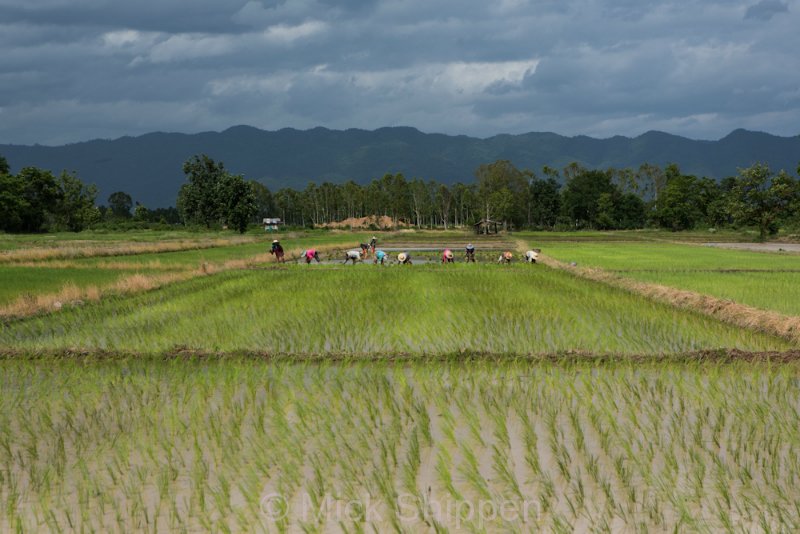
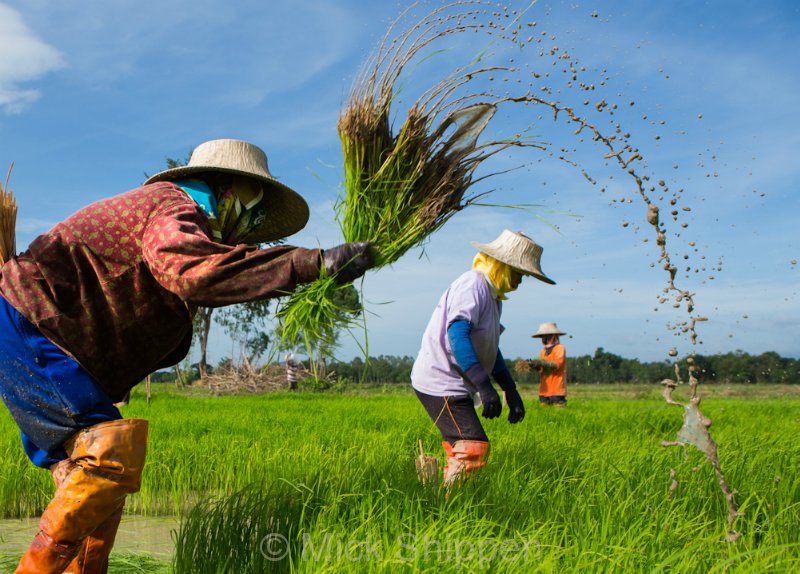
I’ve just returned from four days in Phayao near Chiang Rai in northern Thailand where I was on a photo-assignment for an international grower and exporter of organic rice.
Rice farming in northern Thailand

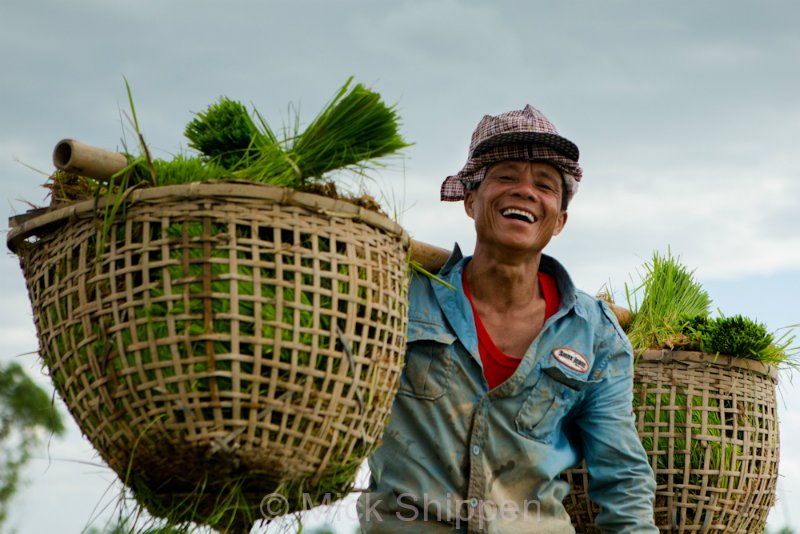
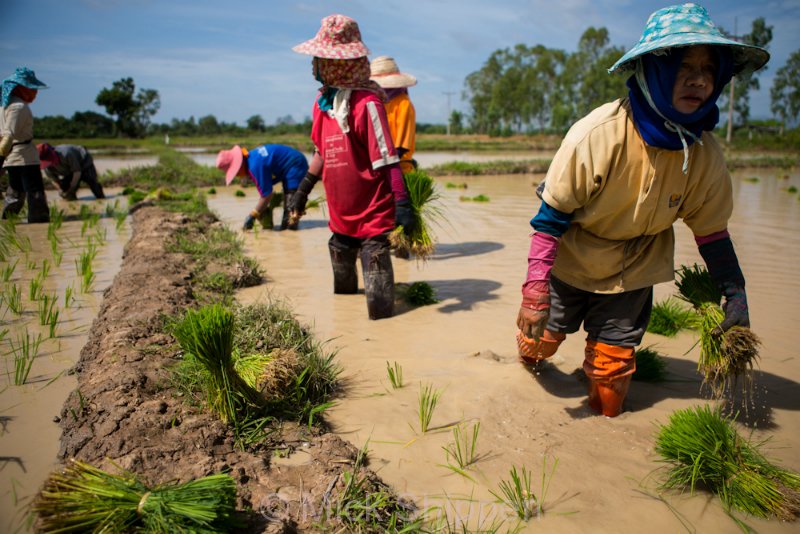
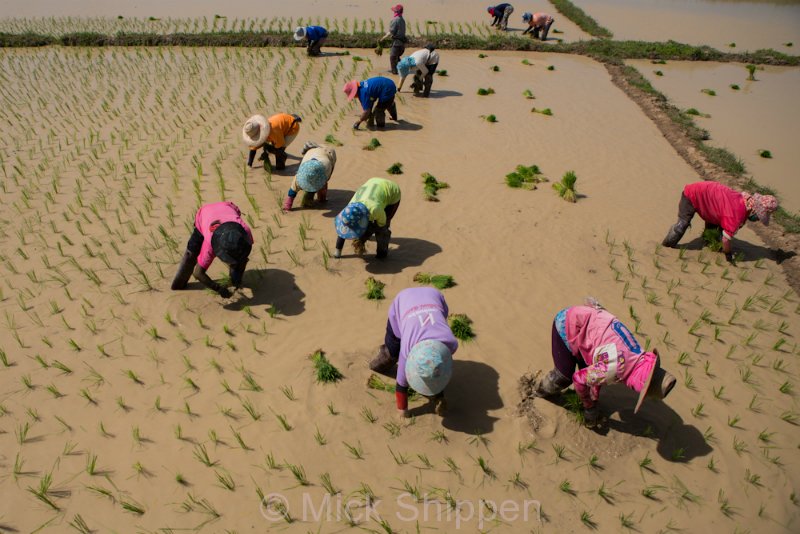
With the rainy season in full swing, it’s time for farmers to uproot the seedlings from the nursery beds and replant in the flooded paddy fields. It’s backbreaking work but a task seemingly enjoyed by the workers and the air is filled with constant chatter, particularly when a farang wades through the mud with a camera slung over his shoulder.
Rice farming in northern Thailand

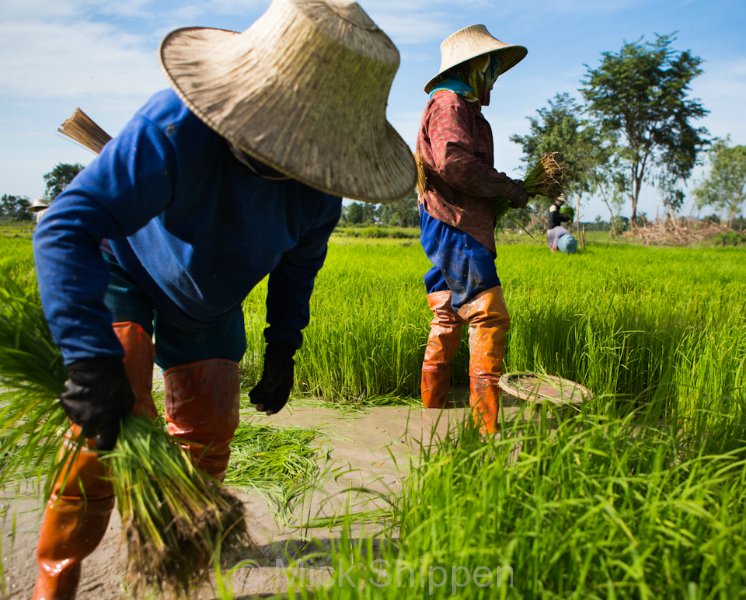
Work usually starts about 8 a.m. and the morning is spent bunching seedlings which are then carried in baskets to a neighbouring paddy where they’ll be replanted in the afternoon.
Rice farming in northern Thailand

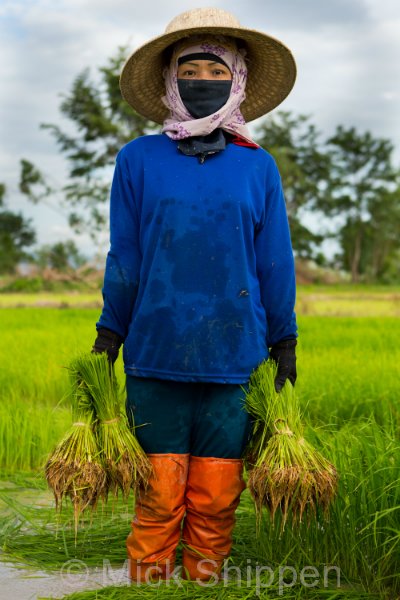
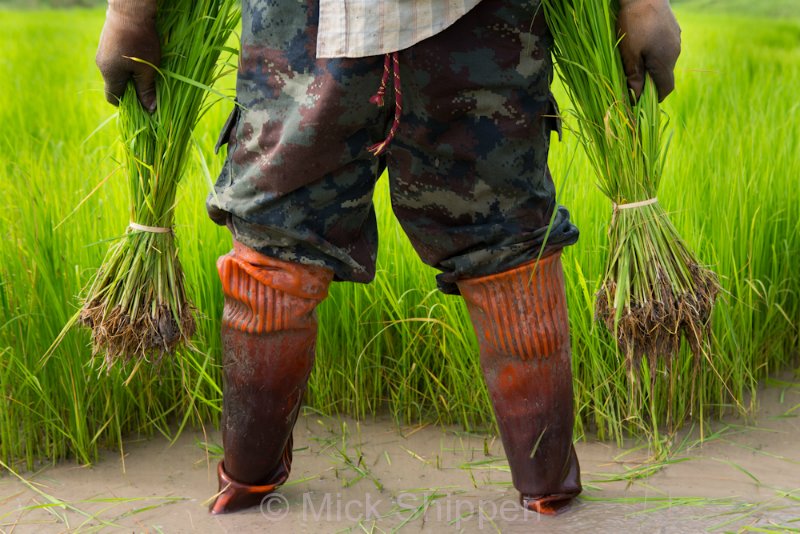
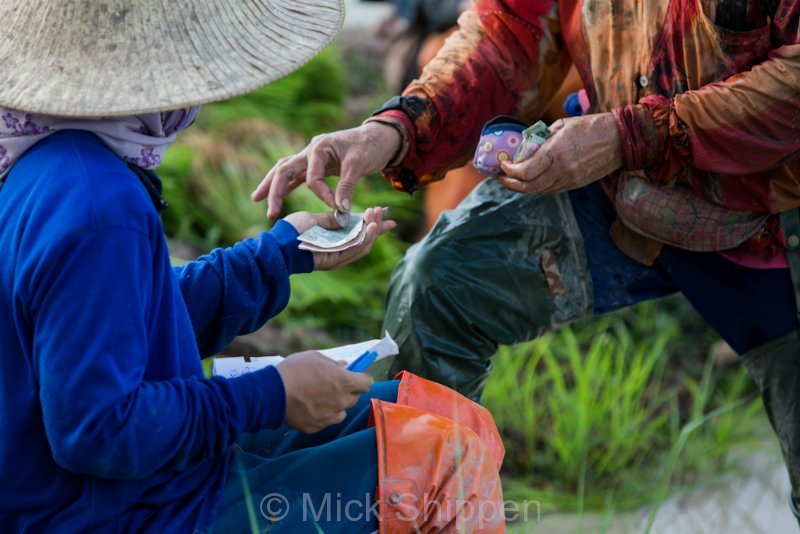
The team are paid one baht a bunch and a good worker can earn 400 – 500 baht a day. Interestingly with one or two exceptions most of them are in their 40s or 50s, even older, as youngsters shy away from the physical labour, preferring easier and cleaner work in the cities. It’s all a little ominous for the future of rice farming in Thailand and although steps have been taken to automate the planting process, it has not yet been perfected and hand planting is still preferred by many.
Rice farming in northern Thailand

In some areas direct broadcasting is done and no replanting carried out but yields can be up to 15 percent lower. The working day ends around 5 or 6 p.m. with an alfresco bottle of rice whisky to ease aching muscles.
Rice farming in northern Thailand


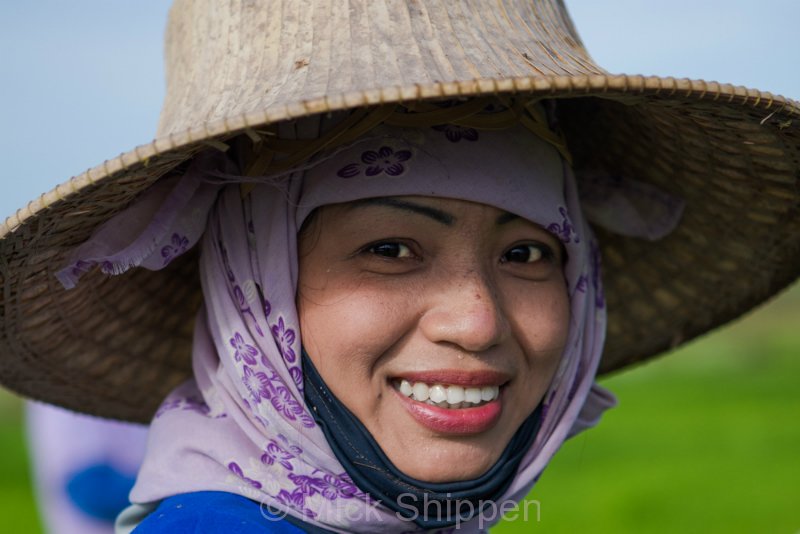
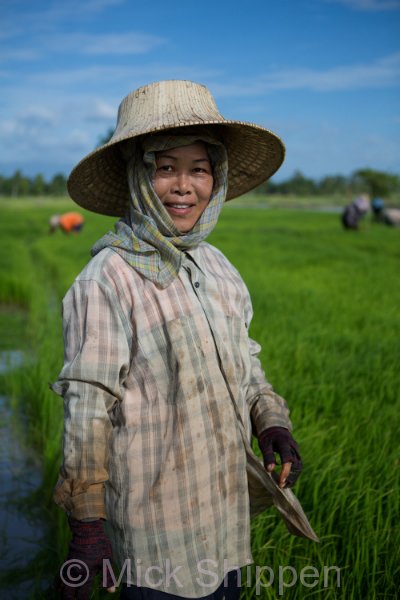
As with any outdoor manual labour in Thailand, the men and woman keep their faces well protected from the sun with scarves and t-shirts. This is particularly important in the rice fields as the sun reflects off the water. When the veils are withdrawn though, there’re plenty of beauties to be seen.
Rice farming in northern Thailand

 Rice farming in northern Thailand

It’s impossible to underestimate the importance of rice in Thailand; a grain that has shaped the landscape and defined the culture. Served at every meal, the preferred choice is jasmine rice, also known as fragrant rice due to it pleasant aroma. In the north and northeast sticky rice or khao neow is more popular. Sticky rice also features in a number of desserts and many sweets are made using rice flour.
 Rice farming in northern Thailand

Once you’ve seen the work that goes into rice production, you’ll never feel comfortable leaving any on your plate again. I’m looking forward to returning to Phayao for the harvest in November.
Rice farming in northern Thailand

You can view several more images in the Thailand Gallery.
Rice farming in northern Thailand

Comment » | food, Travel

Wat Arun, Bangkok

May 27th, 2012 — 11:40am

Despite being based in Bangkok, I rarely find time to photograph the city. That has got to change as I recently signed a contract to do a book on the magical metropolis, know to locals as  Krung Thep. With the deadline clearly visible on the not too distant horizon, I forced myself away from the desk and spent an enjoyable morning in Chinatown and relaxed evening in a bar opposite Wat Arun. I can’t tell you how good it is to have a job that allows me to enjoy a beer and eat while working.

Wat Arun, one of Bangkok's most recognisable landmarks.

Wat Arun is one of the most photographed landmarks in Bangkok. The name means Temple of the Dawn, and the structure is comprised of one elongated prang or Khmer-style chedi surrounded by four smaller ones. The main tower is 82 metres high and features ornate decoration with mosaics made of porcelain and broken bone china. Unlike many of Bangkok’s other temples, this one looks better from a distance, especially when viewed from across the river. Despite its name, the best photographs of it are taken at sunset. Wat Arun is open every day from 8:30 a.m. – 5:30 p.m. Get off at Tha Tien Pier and take a ferry across the river.

Wat Arun, one of Bangkok's most recognisable landmarks.


Comment » | Travel

Enchanting Thailand in Dutch

May 18th, 2012 — 4:49pm

Here’s a bit of good news if you are Dutch or can read the language, ‘Enchanting Thailand’ or rather ‘Betoverend Thailand’ has just been launched in Holland. The hardback book has been released by my publisher, John Beaufoy in association with Atrium and in keeping with other books in the series features an informative text providing insight into the country and culture, accompanied by 180 colour photos.

scan0001_0

From the jacket: “A country of intrigue and adventure, Thailand’s exotic mix of glistening temples, extraordinary annual festivals, idyllic tropical islands, and genuinely hospitable people has made it one of the world’s most popular and rewarding travel destinations. The country is home to a distinctive culture that enables old traditions to sit comfortably within a prosperous and progressive society and enrich the lives of all who visit. One of the original “Asian tiger” economies, over the past two decades Thailand has survived boom and bust, undergone recovery, experienced political upheaval, and still welcomes all travellers with a warm and gracious smile.Enchanting Thailand is a vivid and colourful introduction to all the major tourist sights and places of interest throughout the country, from the cosmopolitan metropolis of Bangkok to fascinating but little visited regions in the northeast.”

If you’ve enjoyed the series, namely “Enchanting Laos” and “Enchanting Cambodia”, watch out for the timely release of “Enchanting Myanmar” in November. There’s also a couple of others on the horizon but more on those at a later date.

Comment » | Travel

Asian Journeys

April 18th, 2012 — 11:49am

The good folks at Asian Journeys recently used an image of mine to grace the cover of their magazine. Hats off to the publisher, editor, adventurer and explorer of the Singapore-based mag, Mr. Floyd Cowan for choosing the picture of a young Thai Yai boy at the Poi Sang Long ordindantion ceremony. Apologies from me for the rather dodgy scan of the cover. However, you can see more images from the annual event on an earlier post here.

Asian Journeys magazine cover

In late March or early April, Poi Sang Long takes place in towns and villages all over Mae Hong Son province. The Buddhist ordination ceremony is part of the Shan or Tai Yai tradition and was brought to Thailand by settlers from neighbouring Myanmar.  During the event known as the Festival of Precious Gems, young boys are ordained as novices and spend time studying Buddhist doctrine. A colourful spectacle to witness, it is one of the most delightful festivals in the country. On the first day of the four day ceremony, the boys have their hair shaved off at the temple and are then bathed and anointed with consecrated waters. The following day they are dressed in brightly coloured clothes and paraded through the town as sang long— precious gems.

You can also visit the Asia Journeys’ website.

Comment » | Travel

A Call to Alms

March 26th, 2012 — 2:44pm

Alms giving for 30,000 Buddhist monks in central Bangkok

I’ve always found large gatherings of people or any so-called mass consciousness rather disturbing to be around. The herd instinct if you like. It is even more unsettling when it is a religious event.

Alms giving for 30,000 Buddhist monks in central Bangkok

On Sunday I went to photograph the final day of a series of large scale alms giving ceremonies that have been carried out around Thailand to celebrate the 2,600th anniversary of the Lord Buddha’s enlightenment. Each event has seen 30,000 monks (one million in all) and thousands of followers gather for prayers. Much of the food collected has also been donated to Buddhists in the south, an area experiencing increasingly violent separatist unrest by Muslims. The final gathering was held near Wongwian Yai in Bangkok.

Alms giving for 30,000 Buddhist monks in central Bangkok


Alms giving for 30,000 Buddhist monks in central Bangkok

Although you cannot deny the visual impact of the gathering (as a photographer that is of course why I was there, I found the whole thing distinctly creepy. The fact Wat Phra Dhammakaya, a Bangkok temple known for aggressive fundraising, was the main organiser didn’t help. Like all religions, the Buddhist institution is riddled with corruption and cultism.

Buddhist monk money box

The ceremony started at 6 a.m. and lasted just over two hours. Of course the prayers were interspersed with plenty of requests to part with your money. The underlying theme seemed to be ‘Practice non-attachment, particularly to your money, land and property – it’s ok, we’ll take care of it for you’. Alas, the call for money is all too frequently heard at Buddhist temples these days .

Alms giving for 30,000 Buddhist monks in central Bangkok

What Buddha would have thought of it, we can only guess.

Buddhist monks walking passed a 'nude resort' in Bangkok

The photo above shows some followers at the event being greeted by monks. The ladies were seemingly oblivious to the backdrop. The writing says ‘Nude Resort’.

1 comment » | Travel

New Books – Enchanting Asia Series

August 23rd, 2011 — 10:27am

I am sure it could be said that my postings are infrequent and when they do appear are distinctly lacking in words. The truth is I’ve never really got with the blogging thing. And the reason is simple; I work for a living. I have always considered irrepressible blogging to be a sure sign that someone has too much time on their hands.

The reason for the scarcity of postings is that for the last few months I have been travelling the length and breadth of Laos, Thailand and Cambodia taking pics for books. Well, the fruits of my labours, words and images, are soon to surface in a bookshop near you…and on the web.

The books were commissioned by John Beaufoy Publishing in the UK as part of the ‘Enchanting Asia’ series. The hardback Thai edition will be co-published with Asia Books.

This brand new ‘Enchanting Asia’ series are pictorial visitor guides showing many of the main cultural attractions that a tourist visiting for a week or so might expect to see. The 190 images in each book are accompanied by an introductory text  with an overview of the history, geography, culture, festivals, food and so on. The second section is of images with extended captions.

enchanting-laos-front-cover

Here’s an overview from my forthcoming book, ‘Enchanting Laos’.

‘Few countries conjure up such a sense of mystery and intrigue in the traveller’s mind as mountainous, landlocked Laos. Regarded as Southeast Asia’s sleepy backwater for many years, Laos’ communist government ensured that the country remained closed to the outside world. Unconcerned by neighbouring Thailand’s dash for modernity, Laos resolutely moved at its own pace. When the door was finally eased open for travellers in the early 90s, it revealed a beautiful country with a fascinating culture and an ethnically diverse population. Today, Laos is well and truly awakening from its slumber. The capital, Vientiane, bustles with renewed energy, but many of Laos’ attractions lie beyond the capital, where the rural population still ekes out an existence as subsistence farmers, fishermen, market traders and merchants. For many in the countryside, little has changed, and that is part of Laos’ enduring appeal for visitors.’

Here in Asia the books will be available in Asia Books throughout Thailand and Monument Books in Laos, Cambodia and Mynamar from November 4th 2011. Of course they will also be available in Europe and the USA at all good bookshops. You can also order online at Amazon. They are the perfect Christmas gift!

I am currently working on Enchanting Myanmar, a project that I am particularly excited about as it is the most fascinating country in Southeast Asia.

Comment » | Travel

Friendship Bridge, Nong Khai

August 3rd, 2011 — 6:22pm

img_2292

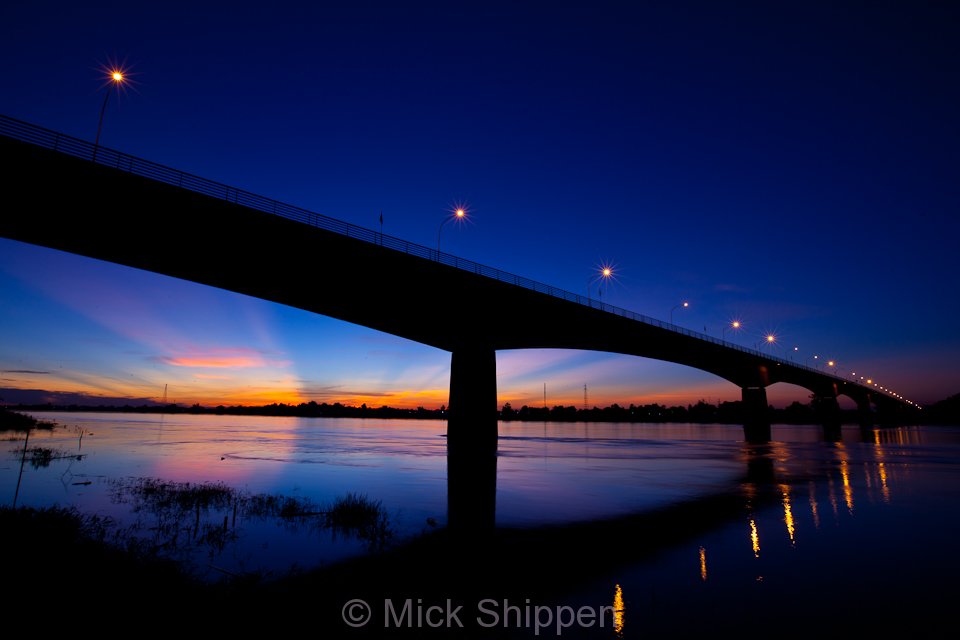
I was in Nong Khai last week. Luckily I returned just before it was hit by heavy flooding. It’s a pleasant little town, particularly at this time of year when it has a sleepy low season feel about it.  The town sits in the northern reaches of Issan and you can enjoy lazy evenings dining beside the Mekong River on floating restaurants and, if you wish, cross into neighbouring Laos via the Friendship Bridge. The area is known for great sunsets and the bridge is a good spot to capture them.

Comment » | Travel

Poi Sang Long

May 6th, 2011 — 7:36pm

The website has been sadly neglected of late due to book commitments but all Thai images were sent to the publisher today. Now I just have to finish Laos and Cambodia editions…and am rushing off to Phonsavan in Laos tomorrow morning for a few days.

psl-01

Something I should have posted a few weeks ago are snaps from the annual Poi Sang Long Festival, held in the northern Thai province of Mae Hong Son, one of my favourite parts of the country.

psl-02

In late March or early April, Poi Sang Long takes place in towns and villages all over Mae Hong Son province. The Buddhist ordination ceremony is part of the Shan or Tai Yai tradition and was brought to Thailand by settlers from neighbouring Myanmar. 

psl-07


During the event known as the Festival of Precious Gems, young boys are ordained as novices and spend time studying Buddhist doctrine. A colourful spectacle to witness, it is one of the most delightful festivals in the country.

psl-08

On the first day of the four day ceremony, the boys have their hair shaved off at the temple and are then bathed and anointed with consecrated waters. The following day they are dressed in brightly coloured clothes and paraded through the town as sang long— precious gems.

psl-06

I witnessed event in the town of Mae Hong Son but on a trusty dirt bike also managed to get to a Tai Yai village right up against the Myanmar border where 50 young boys were being prepared for the ordinations. It was a truly fabulous day.

psl-010

While in the area I was able to visit the wonderful Phen, owner of the Little Eden Guesthouse, and the north’s best trekking guide. She has a beautiful place about 60 kilometres before Mae Hong Son and she is a great host. One of the joys of staying here, apart from Phen’s company and the lovely garden setting, is the menu of regional Shan food cooked up by two young Tai Yai girls. If you are traveling in the province, make a date to stay at Little Eden Guesthouse.

More Poi Sang Long images can be seen in the Thailand Gallery.

Stay tuned for infrequent posts and lame excuses.

Comment » | Travel

Bhumibol Bridge, Bangkok

April 1st, 2011 — 4:37pm

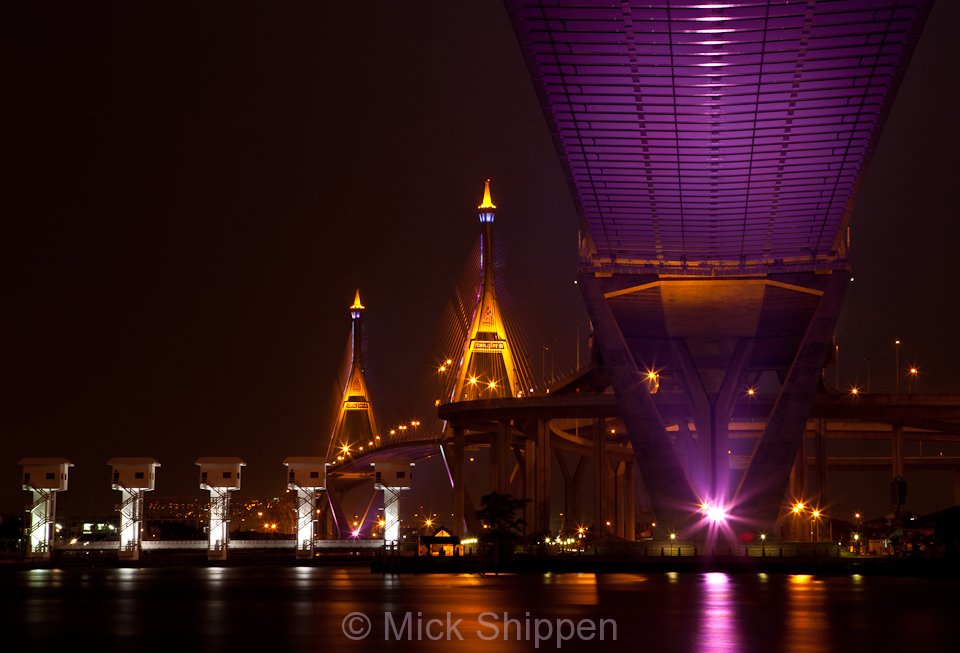
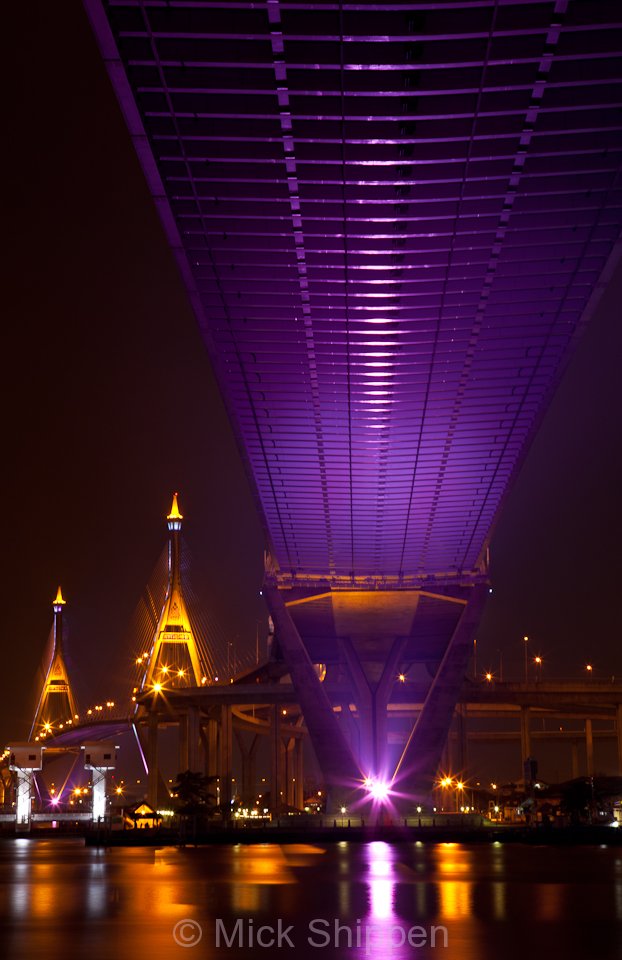
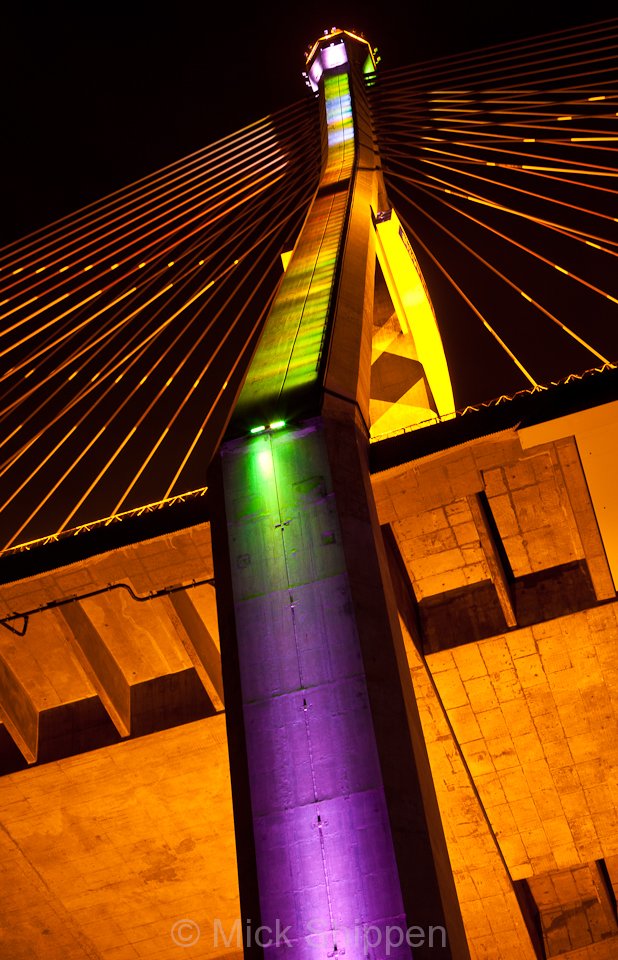
Bangkok has more that its fair share of impressive bridges but the Bhumibol Bridge, named after the King of Thailand is one of the most spectacular.

bp-01

It is part of a 13 kilometre long industrial ring road that connects southern Bangkok with Samut Prakan Province. It’s also just spitting distance from where I live so last night I went out to take a few shots of this monumental structure. 

bp-02

The bridge spans and features two spans of 702 metres and 582 metres supported by two diamond-shaped pylons of 173 metres and 164 metres in height. At sunset, the multicoloured lights are turned on and the bridge is visible for miles around. 

bp-03

Comment » | Travel

Wat Phra Kaew

February 22nd, 2011 — 5:04pm

I’ve been trying to take photographs at Wat Phra Kaew for a while but every time I go it is swarming with coach-loads of tourists.  On two occasions I have simply turned back and promised to return when it is less busy; something that it never seems to be.

wat-phra-kaew-1

I even tried to seek assistance from the TAT, the terribly unhelpful Tourist Authority of Thailand, to see if I could be allowed in before or after opening hours. Although the TAT is extremely good at wasting money on large glitzy PR events and mega FAM trips for foreign media, it seems that when it comes to something useful, the answer is usually a resounding ‘no’ – assuming you are lucky enough to even get a response to your email enquiry.  So, armed with a camera and a high degree of intolerance to mass tourism, I endeavoured to make Wat Phra Kaew appear a serene place that is seldom visited.

wat-phra-kaew-2

Of course, there is a good reason why it is on every itinerary. It is a simply stunning temple…just don’t expect to have a relaxed and contemplative experience. Being shoulder-barged out of the way by a Korean tourist desperate to be photographed imitating one of the sculptures is more likely…

wat-phra-kaew-3

Wat Phra Kaew or the Temple of the Emerald Buddha and the nearby Grand Palace are highlights of any visit to Bangkok. The compound has over 100 buildings, golden spires and glittering mosaics.

wat-phra-kaew-4

The temple dates back to the founding of Bangkok in 1782, and was built early in the reign of King Rama 1. It is Thailand’s most sacred temple and houses a 70 centimetre Emerald Buddha. The golden robe draped around the Buddha image is changed three times each year by King Bhumibol.

wat-phra-kaew-5

Today, Wat Phra Kaew still serves as a centre for all religious rites pertaining to the State and monarchy.

wat-phra-kaew-6

The easiest way to get to Wat Phra Kaew is to go by boat from the pier at Saphan Thaksin. Alight at Tha Chang pier and walk the short distance to the temple. Entry is 350 baht. Thais are free of charge.

wat-phra-kaew-7 

Comment » | Travel

Year of the Rabbit

February 14th, 2011 — 9:42pm

This month’s travel schedule has meant that I am late posting images taken during celebrations to mark the Year of the Rabbit. The day after it all took place, I headed off to Laos for a whirlwind tour of the south, taking pics for a forthcoming book.

chinatown-01

Having just returned, I’ve hastily sorted through a few shots taken at night in one of Bangkok’s many Chinatown temples.

chinatown-02

 To be honest, the celebrations in the daytime, and mingling with the masses waiting to politicians to make an appearance didn’t do a lot for me so I decided to return in the evening when the whole event is far more atmospheric.

chinatown-03

Thousands Thai- Chinese visit temples in the area throughout the day and night to make merit, light candles and incense, and receive blessings from monks.

chinatown-05

Chinatown is one of Bangkok’s most historic areas and was originally settled by Chinese traders during the Sukhothai era.  According to local superstition, the long winding Yaowarat Road resembles a dragon’s body and is therefore an auspicious place to conduct business.

chinatown-04

The most convenient way to get Chinatown is to travel on the MRT underground to Hualampong Station and then get a tuk-tuk or taxi.

chinatown-06

Comment » | Travel

Doi Suthep

January 28th, 2011 — 5:28pm

As a destination for a weekend or extended break from Bangkok, Chiang Mai is hard to beat. Despite the fact that the city has experienced far too much uncontrolled development in years and suffers from bad pollution, I still have a deep affection for Chiang Mai. In fact I lived there for about six years, so know it extremely well.

doi-suthep-01

With a dirt bike at my disposal for the weekend I took a blast up to Doi Suthep, a 1600 metre peak that overlooks Chiang Mai. It is also home to the famous temple, Wat Pra That Doi Suthep. The 15 kilometre journey is a winding rollercoaster ride, superb on a motorcycle.

doi-suthep-06

The temple is incredibly popular with Thai visitors to the city who go to pay respect at what is generally regarded as one of the country’s most sacred religious sites. Once you reach the car park and market at the site, there’re 306 steps to tackle in order get to the actually temple. It’s definitely worth the climb but try to go as early as possible to avoid the crowds.

doi-suthep-03

At the temple, it is tradition to walk around the golden chedi three times before lighting incense and a candle, and offering a lotus flower to an image of Buddha.

doi-suthep-02

There are plenty of nice details to pick up on through the lens.

doi-suthep-05

doi-suthep-04

Getting there:

Chiang Mai lies 800 kilometres north of Bangkok and just over an hour away by air. Thai Airways and Air Asia fly direct whereas Bangkok Airways fly via Sukhothai.

The overnight train from Bangkok’s Hua Lampong station to Chiang Mai makes for an interesting and considerably cheaper travel option. The air conditioned carriages are comfortable and the train also features a restaurant car. Of the two trains that travel the Chiang Mai route the Nakornping Express is recommended. Be sure to book in advance and ask for a bottom bunk. They are wider and more comfortable that the upper bunks.

Comment » | Travel

Bor Sang Beauties

January 28th, 2011 — 3:38pm

bor-sang-07

I was in Chiang Mai at the weekend on a photo assignment and took a ride to Bor Sang, about 10 kilometres outside the city. The town is renowned for making umbrellas from bamboo and saa paper. On Saturday and Sunday the annual umbrella festival was taking place. This involves lots of typically Thai fun, music, dance and parades.

bor-sang-06

A bevy of young beauties from the local school were performing a dance routine on Sunday afternoon and I was made to promise that I would post a few pictures on the website.

bor-sang-05

There were also demonstrations of the art of umbrella making and painting.

bor-sang-01

There are dozens of workshops in Bor Sang producing umbrellas for the local and international tourist market.

bor-sang-03

It was a good opportunity to capture some visually striking images for a book I am working on about Thailand.

bor-sang-04

Comment » | Travel

Ayutthaya

January 10th, 2011 — 8:18pm

I have just returned from a long weekend in the town of Ayutthaya, one of the most culturally and historically interesting towns within easy reach of Bangkok. Thailand’s former capital is a must on any travel itinerary.

ayutthaya1

Once praised by foreign emissaries as the finest town they had ever seen (at least according to Tourist Authority of Thailand it was), today many of the ancient ruins have now been encroached upon by the new town resulting in a typically ramshackle Thai approach to preservation. Indeed the site was given UNESCO World Heritage status but I heard that this may be at risk due to the over commercialization of areas within the park with souvenir stalls and so on. The town certainly does get overrun with foreign and local tourists eager to buy the tat on offer but I see no reason way it can’t be kept away from the temple sites. But this is Thailand after all – the land that never let heritage get in the way of making money…

ayutthaya2

Ayutthaya was founded in 1350 by King U-Thong. During the 14th and 15th centuries the Thai kings of Ayutthaya had built the town with three palaces and over 400 temples. By the mid-16th century Ayutthaya was sacked by an invading Burmese army and, along with Lanna in north Thailand, came under their control.

ayutthaya3

 Although Thais regained control of both areas by the end of the century, the Burmese invaded Ayutthaya again in 1767, fighting and winning a fierce two-year battle. Many of the temples were destroyed.

ayutthaya4

Situated approximately 86 kilometres from Bangkok, Ayutthaya can be reached by car in little over an hour, by train in 90 minutes (in theory at least. My trip on the way there took three hours), and by river.

ayutthaya5

You can see a few more images from Ayutthaya in the Thailand gallery.

Comment » | Travel

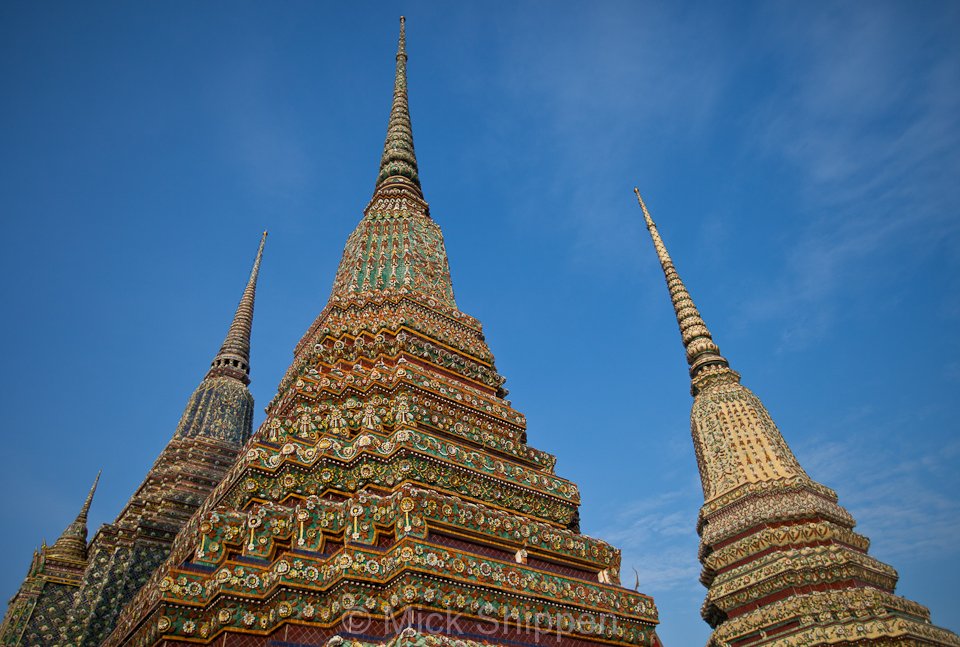
Wat Pho

January 6th, 2011 — 5:08pm

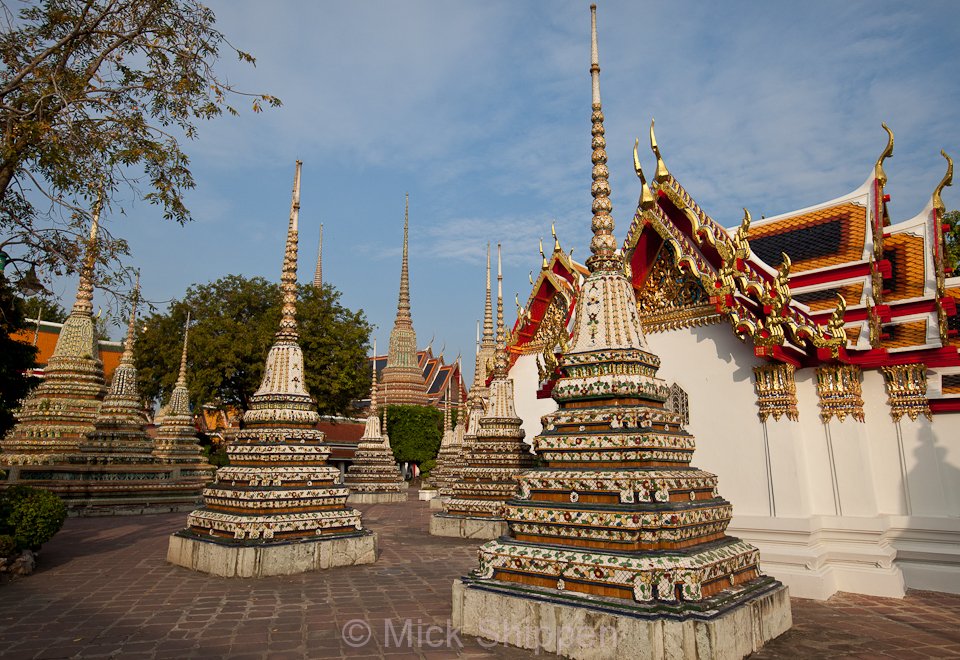
Of course, the downside of photographing Thailand’s main attractions is the inevitable temple and Buddha image overload. I’ve been traipsing round the major sites in Bangkok including one of my favourites, Wat Pho.

watpho1_0

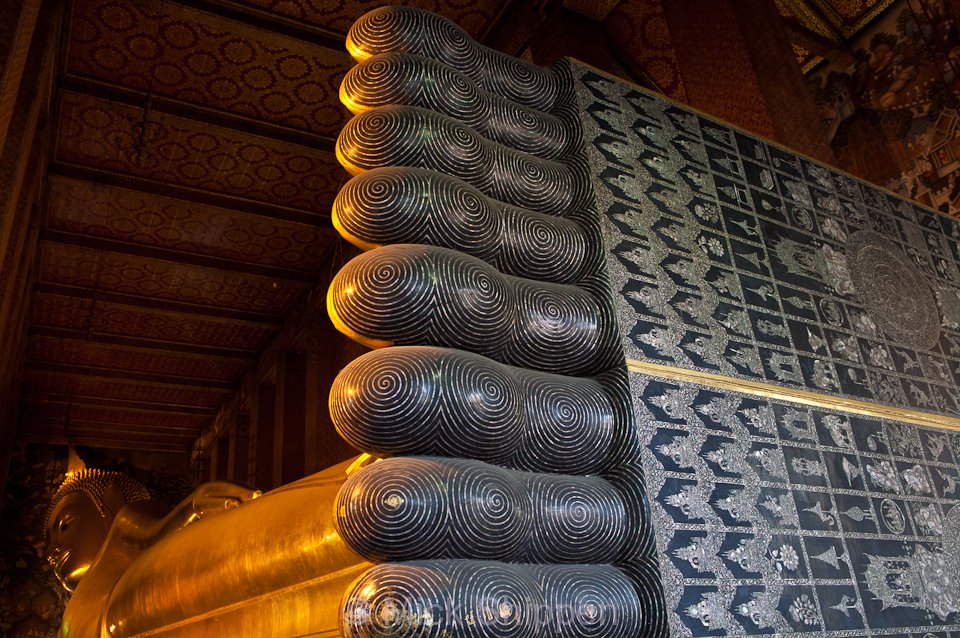
Also known as Wat Phra Chetuphon, Wat Pho is one of the finest temples in Bangkok and renowned for a huge reclining Buddha housed within a beautifully decorated hall. The 46 metre long and 15 metre high image was constructed in 1832 during the reign of King Rama III.

watpho3

Designed to illustrate the passing of the Buddha into nirvana, the enormous feet feature mother-of-pearl inlay decoration showing the 108 auspicious characteristics of the true Buddha.

watpho5

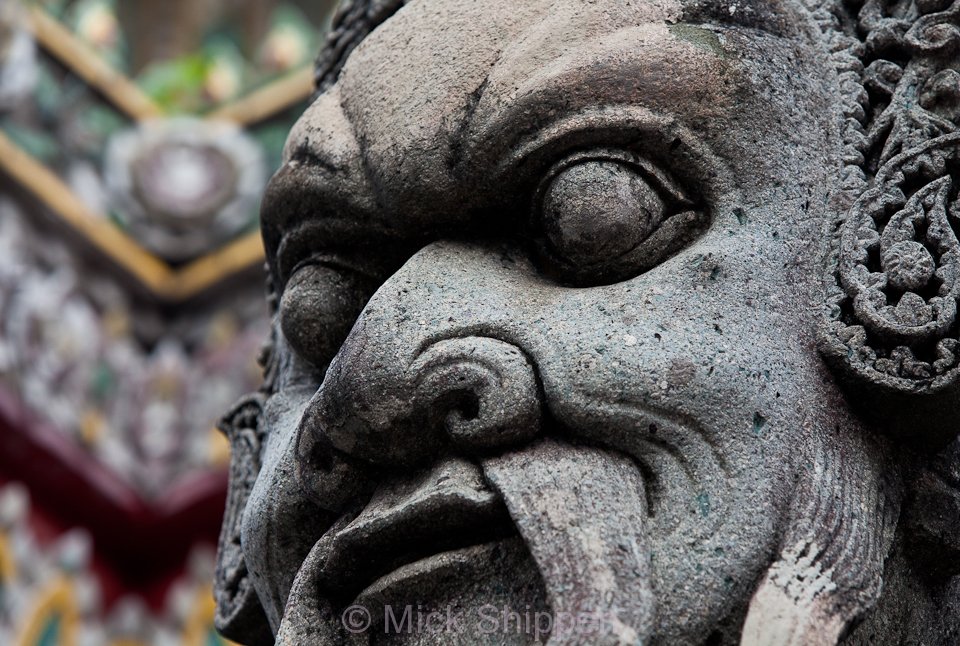
The inner and outer galleries  are lined with 788 Buddha images, the largest collection  in Thailand, and stone carvings of Chinese figures. Wat Pho is also a centre for the teaching traditional Thai medicine and massage. King Rama III instructed that the temple should become a centre of learning and had traditional knowledge inscribed on stone slabs.

watpho6

It is practically impossible to enjoy the temple without hordes of tourists but if you get there early you can grab a few quiet moments.

Comment » | Travel

Hua Lampong Station

January 6th, 2011 — 4:17pm

I’m currently working on a couple of book projects and photographing to an agreed list of attractions around Thailand. It’s an interesting process because I am having to tackle subjects that I would normally not bother with. Of course, it is also a great way to build up a good stock of images.

hualampong-1

Last night I went down to Hua Lampong Station, the hub for all rail travel in Thailand. Located on the outskirts of Chinatown, the grand old station is a reminder of an age when the train truly revolutionized travel within Thailand. From here, tracks stretch northwards to Chiang Mai and east into Issan, where the line divides at Nakhon Rachasima, with one line running up to Nong Khai and onward over the Laos border, and the other heading for Ubon Ratchathani. A shorter branch line also runs from Bangkok to the town of Aranya Phratet on the Thai-Cambodian border. Train enthusiasts and historians can travel west to Kanchanaburi, the site of the famous ‘bridge over the River Kwai’ and Hellfire Pass, or use the line to travel south to reach Thailand’s islands and beaches. Moving along at an unhurried pace, the comfortable carriages pass through the royal resort of Hua Hin and its beautiful old station and then on to Chumphon, Surat Thani and Hat Yai. From here you can even continue by rail on to Kuala Lumpur and Singapore.

hualampong2

Construction of Hua Lampong Station started in 1910 and it opened for service on June 25, 1916. It’s a beautiful sight when lit up at night.

Comment » | Travel

Monk on the Beach

January 6th, 2011 — 3:40pm

No, the heading’s not the title of a long lost album by the late great Theolonius…

I was recently in Hua Hin doing a few reviews for the Bangkok Post and while there managed to snap a few shots of monks collecting alms on the beach.

In recent years, the once sleepy royal resort town of Hua Hin has awoken. As the location of the King of Thailand’s summer palace, the town has always courted favour with wealthy Bangkok Thais but today, it’s not just city types slipping away for a weekend of clean air and fresh seafood. The town is squarely on the map as an international holiday destination.

huahin-monk1

Just 200 kilometres south of Bangkok on the west coast of the Gulf of Thailand, Hua Hin is easily accessible by road, rail and air. Although the boom in business, hotels and housing has meant that the town has inevitably lost it sleepy feel, Hua Hin has managed to retain its charm and is free of the sleaze that plagues many of Thailand’s other beach resorts.

huahin-sunset

The majority of the five star resorts are pushed up agaimst the beach. Rise at day break and you’ll see monks returning to temples further down the seafront, stopping to collect alms as they do so from locals and tourists. It’s a photographic opportunity too good to miss.

huahin-monk2

huahin-monk3

Comment » | Travel

Love to Klong Toey

November 23rd, 2010 — 5:04pm

Thailand’s annual Loy Kratong festival was held on Sunday, the night of November’s full moon. I did hope to spend an evening enjoying the atmosphere and getting dozens of shots but I wasn’t really in the mood for it.  I ended up with just a few – enough to get me out of trouble.

loy-kratong-1

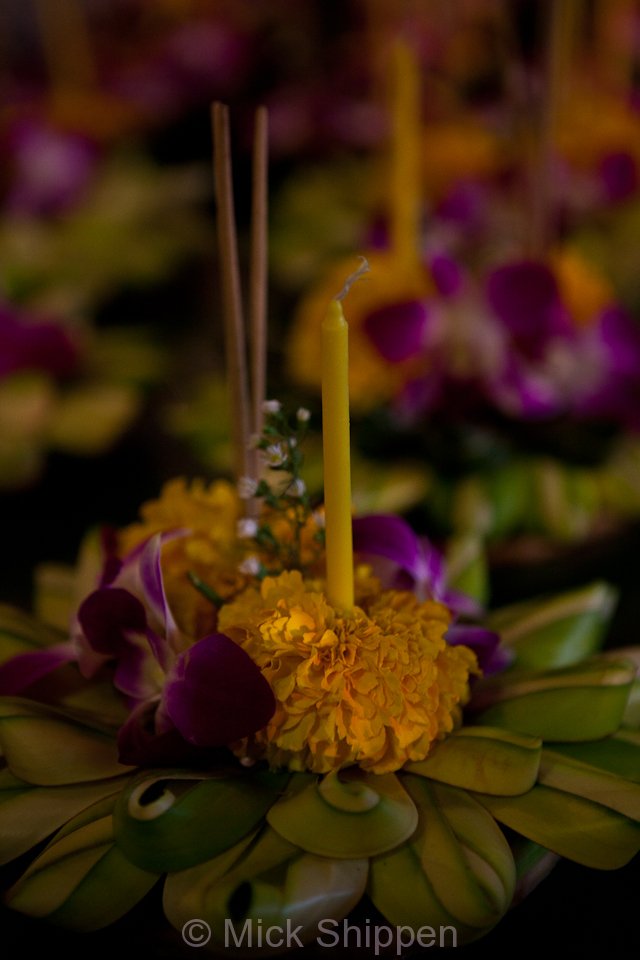
During the evening, millions of people across the entire country go down to the nearest river to float their kratongs, small rafts made from a banana palm and decorated with flowers, a candle and incense. They believe this will bring them good luck throughout the year. In more recent years the gesture of floating a kratong has also become closely associated with romance so I bought myself the most beautiful kratong I could find and watched it float away, carrying my love to Klong Toey.

loy-kratong-3

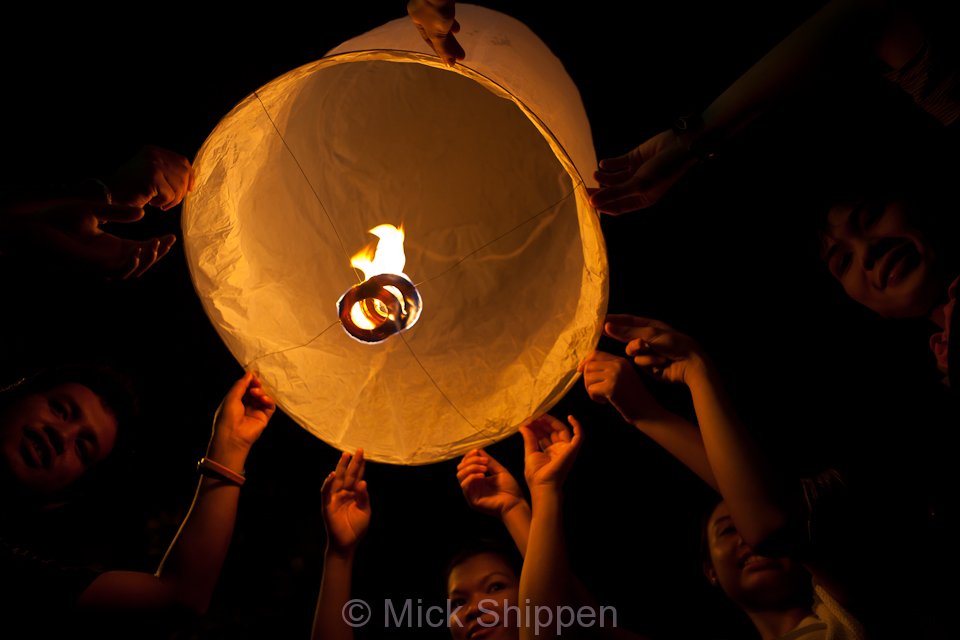
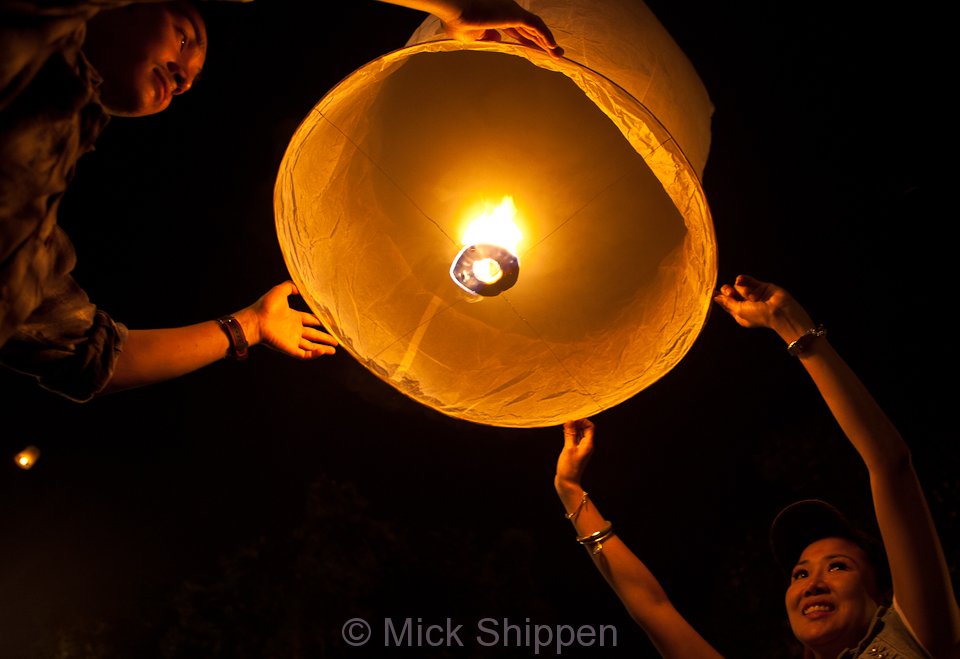
In Chiang Mai and the north, the festival is known as Yi Peng and lanterns are released into the night sky. This tradition has also now been adopted in Bangkok.

loy-kratong-2

1 comment » | Travel

Street Eats in Bangkok

October 8th, 2010 — 11:13am

Thailand has a stunning variety of street food. Towns teem with stalls serving a bewildering array of culinary delights. Any visitor to the country is strongly advised to occasionally forego the flashy restaurants and opt for a cheap and cheerful street treat.

fd01

Dining street-side in Bangkok is an extraordinary experience, a feast for the eyes as much as it is for the stomach. I was recently asked to do a set of images for a restaurant. It was decided that the shots should be close-ups. It is still a work in progress but here’re a few examples.

fd03

Thailand is often described as a ‘food culture’, a statement that implies that food is more than simply sustenance but central to almost every aspect of social life. One only needs to wander down virtually street to realise just how true that statement is.

fd11

Almost everywhere, enterprising vendors have regular pitches on the pavement, many specialising in one particular item, while others are able to turn their hand to a bewildering amount of dishes. Yet they all have one thing in common, the food they serve is cheap, tasty and ready in minutes, the very definition of fast food.

fd05

Whether you are looking for a quick alfresco breakfast, a full-blown lunch, a tempting in between meals nibble or something to soak up the ale after stumbling out of a bar, the street vendors have it all, 24 hours a day.

fd07

 One of the most frequently heard greetings in the country is ‘kin khao yang?’, or ‘have you eaten yet.’ Thai people are communal diners and grazers, seldom eating alone and never satisfied with just one dish. After work, street stalls swarm with office staff and the air is filled with the irresistible aroma of dozens of different dishes, the fiery waft of stir-fried chilies, lemongrass scented soups and grilled meats.

fd08

Although the typical Chinese noodle or chicken and rice stall is still very much part of Bangkok’s culinary street scene, the majority of the street traders come from the northeast of Thailand, economic migrants from the hot and under-developed Issan. As part of the Asian tiger economies much of the Thailand’s boom time growth and investment during the early 90s focused on Bangkok, by-passing the rural areas. Resilient and hardworking, Issan people moved in droves to the big city to work as taxis drivers or as labour on construction sites, bringing with them their distinctive music, culture and of course, food.

fd02_0

Street vendors provide a great service and create a very special atmosphere, not only within the environs of Bangkok but across the entire country. The price of food is kept low due to minimal overheads; most pay a small fee for their pitch to shop owners if they are in front of a business and a weekly backhander to the police.Vendors are such an integral part of Thai life it is hard to imagine the city without them. Bangkok authorities, who have said that they believe there to be over 43,000 street stalls throughout the city, declared Monday to be a vendor-free day. It is then that you truly realize how much the city’s character is defined by these amazing roadside chefs. Yet their wonderful cooking and easy availability of cheap and tasty food is increasingly threatened.

fd16

In recent years occasional campaigns by the authorities have attempted to remove them from certain areas, blaming them for contributing to traffic problems or stating that they are a nuisance for pedestrians. When international dignitaries visit the country stall owners are often banned from selling on the street in order to ‘clean up the city and create a good impression’.  Keen to create and enforce the rules and regulations that blight western nations, the authorities seem oblivious to the fact that most visitors love to see and sample the remarkable food.

fd15


1 comment » | food, Travel

Red Day in Bangkok

September 19th, 2010 — 3:00pm

The Thai Red Shirts turned out in Bangkok this morning for the first show of strength since the bloody crackdown by government forces in May. Several thousand gathered at the Ratchaprasong intersection to mark the fourth anniversary of the coup that ousted former PM Thaksin.

rd1

A shrine was also set up to honour those shot on the 19th May this year when armed forces dispersed anti-government protesters.

rd2

The crowd was in good spirits, singing and chanting for the government to get out, with only the occasional skirmish with police when a few reds tried to block the road. The police have said they will allow the Red Shirts to stay at Ratchaprasong until 8 p.m. today. It seems to be an agreement that will be honour by the reds. When I jokingly asked a few demonstrators if they were here for the day or the next two months, they assured me it was only for the day.

rd4

The picture above shows a Red Shirt supporter holding up an image of Seh Daeng, a revered leader of the movement who was assinated in May by a sniper while being interviewed by a journalist.

rd10

 Several other demonstrations are going on around the country. There is a large gathering in Chiang Mai, a pro-Thaksin stronghold. There have also been reports that the Interior Ministry has called for counter demonstrations with some 50,000 supporters of the ‘Monarchy Defence Network’ taking to the street in several provinces.

rd6

As usual, there were plenty of colourful characters – literally – at the demonstration.

rd7

Of course, Thaksin also put in an appearance.

Divisions in Thai society are clearly as strong as ever. In all honesty, given the propaganda being churned out by the political machine, constant crackdowns on freedom of speech, and the censorship of over 113,000 websites (more than China), it’s hard to remain positive about Thailand’s democratic future.

rd8


Comment » | Politics

↑ Back to top